Are you planning a motorhome trip in Italy? Do you want to get up to date with the regulations currently in force in this country? Discover in this article everything you need to know about motorhome regulations in Italy!
Reminder of motorhome regulations for driving and parking
Driving a motorhome
What driving license is required to drive a motorhome?
If you wish to drive a motorhome weighing 3.5 tonnes or less in Italy, a category B driving license is sufficient! Indeed, most leisure vehicles available on the market (motorhomes, vans, campervans…) do not exceed 3.5 tonnes.
- Since 2024, certain extensions of the category B license (such as B96 or specific national training recognized in Italy) may allow you to tow heavier combinations under certain conditions, but for a motorhome alone, the rule remains unchanged.
If you wish to drive a motorhome weighing more than 3.5 tonnes, you will need an appropriate license. The C1 license allows you to drive a vehicle weighing between 3.5 and 7.5 tonnes (maximum authorized mass). Above 7.5 tonnes, a category C license is required.
Is there a specific Highway Code for motorhomes?
The Highway Code governing car traffic in Italy also applies to motorhomes! Speed limits are therefore identical for both, as long as the vehicle does not exceed 3.5 tonnes. However, since 2024, several Italian municipalities have strengthened automatic enforcement (speed cameras and ZTL zones) for leisure vehicles, requiring increased vigilance.
For reference, here are the current speed limits for vehicles up to 3.5 tonnes in Italy:
- 50 km/h in built-up areas
- 90 km/h on secondary extra-urban roads
- 110 km/h on main extra-urban roads
- 130 km/h on motorways
Motorhomes over 3.5 tonnes must comply with different speed regulations:
- 50 km/h in built-up areas
- 80 km/h on secondary extra-urban roads
- 80 km/h on main extra-urban roads
- 100 km/h on motorways
Note that in adverse weather conditions (rain, snow), some motorway sections automatically reduce speed limits via dynamic signage, including for motorhomes.
However, you should remain cautious regardless of the vehicle’s total weight. A motorhome should generally maintain a maximum speed of 100 to 110 km/h on motorways, even if it is under 3.5 tonnes, due to braking distances.
In general, always make sure to comply with local motorhome regulations in Italy. On the Amalfi Coast, for example, famous for its beautiful villages overlooking the sea and its narrow roads, driving a motorhome is discouraged or even prohibited depending on the time of year. These restrictions have been extended and reinforced until 2026, with stricter seasonal bans and increased controls, especially during peak season.
- If you are planning a trip to this region, be sure to monitor traffic conditions and stay informed in real time. Road conditions are managed week by week depending on tourist flows and the season.
What are the motorway tolls when traveling by motorhome?
Almost all motorways in Italy are toll roads. Tolls are calculated based on the vehicle class (A, B, etc.), which depends on the number of axles and the vehicle’s height. You can check which category your motorhome falls into here! Be careful to select the correct category to avoid being overcharged.
Since 2025, some motorways have also introduced barrier-free toll systems (free-flow), allowing payment online or at a later time. These systems also apply to motorhomes.
Parking a motorhome
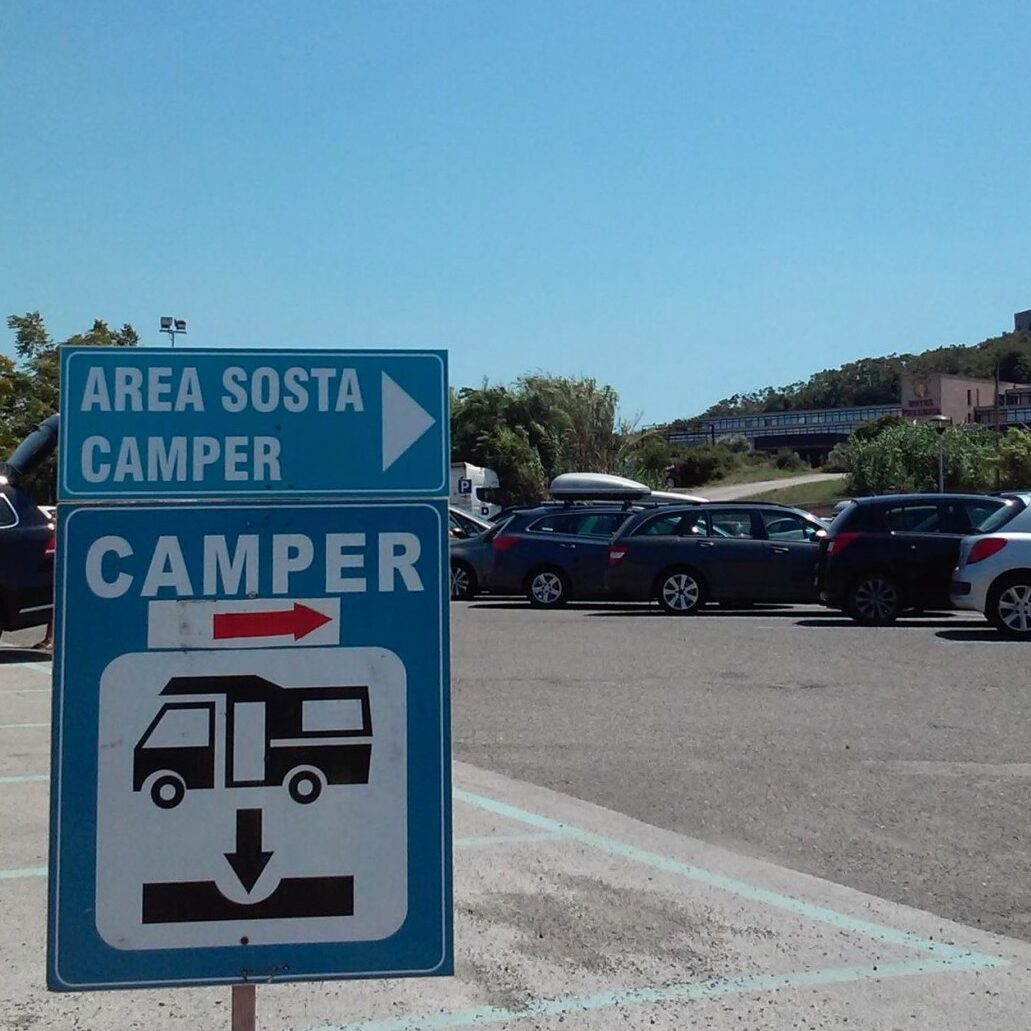
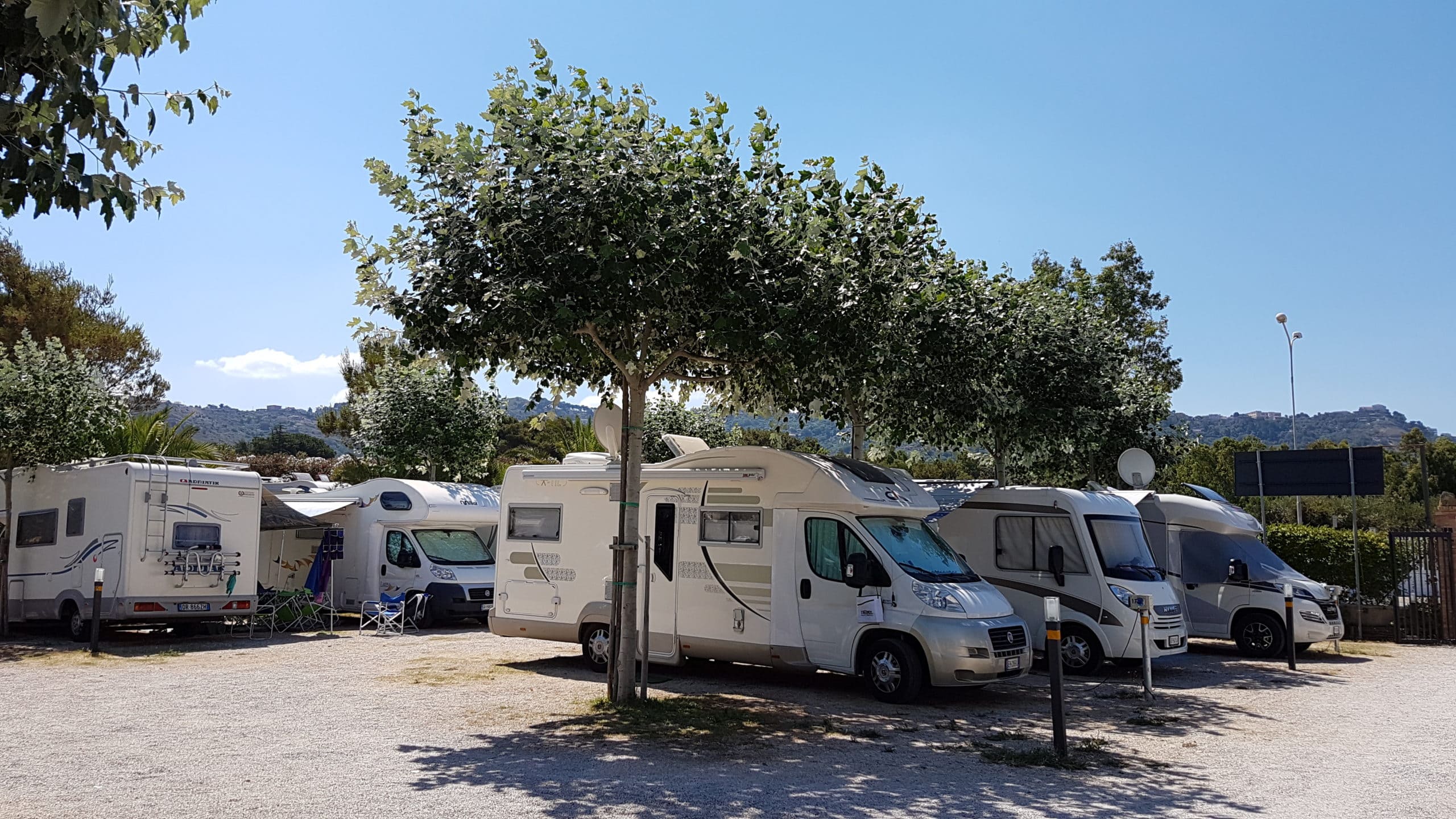
According to Article 185 of the Highway Code, you are allowed to sleep in your motorhome on public roads, provided that it is properly parked and that you do not adopt “camping-like” behavior. It is therefore best to avoid setting up an awning, outdoor furniture, or leveling blocks. It is also forbidden to dispose of organic waste or wastewater outside designated systems, under penalty of a fine ranging from €84 to €335. Since 2024, several municipalities have strengthened environmental penalties, with fines that can exceed these amounts in cases of proven pollution or repeat offenses.
- Legal note: parking is defined as a vehicle resting on its wheels, without any additional ground occupation.
Be aware that motorhome owners may be charged up to 50% more than car owners in paid parking areas (this varies depending on the municipality). However, some cities now apply pricing based on the size or emissions of the vehicle.
To avoid any issues, head to service areas specifically designed for motorhomes or campsites, using the CaraMaps app!
Wild camping in Italy
Italy officially prohibits wild camping, and this practice may be punished with a fine ranging from €100 to €500. In some regions and protected areas, these fines can now be higher and may be accompanied by immediate eviction from the site. Motorhome regulations remain somewhat unclear and vary depending on the region. This is especially true in the most touristy areas of Italy, where authorities are particularly strict regarding wild camping.
However, there are some situations where wild camping may be tolerated:
- Outside tourist areas and major cities, in rural areas, locals and authorities generally tolerate wild camping. This tolerance has been decreasing since 2025 due to increased tourism.
- It is possible to spend one night in your vehicle to “restore your ability to drive”. The absolute rule is to stay only one night in the same place.
- Be sure to check regional laws regarding motorhome use: tolerance levels vary from one place to another.
- For example, in the Abruzzo region, known for its national parks, camping is only allowed in designated motorhome areas for a maximum stay of five days, and only if “minimum hygiene and environmental protection requirements” are met.
- Municipalities define parking areas and may introduce a tourist tax (according to regional law no. 16, article 9). This type of regional regulation has become more widespread in several Italian regions since 2024.
Want to learn more about wild camping in Italy? Feel free to check out our blog article “The best places for wild camping in Italy”!
What about motorhome regulations in Italy in recent years?
Restrictions to protect the environment
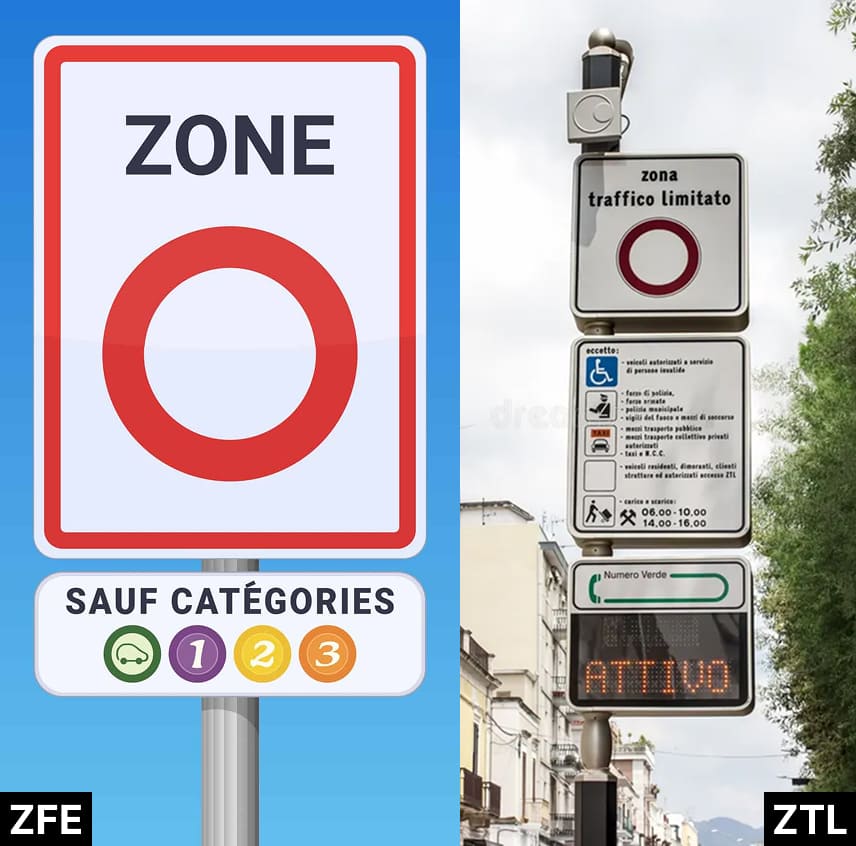
Like many of its European neighbors, Italy has introduced environmental zones in several major cities such as Rome, Milan, Bologna, and Florence. In 2026, these measures include both Low Emission Zones (LEZ) and Limited Traffic Zones (ZTL), which serve different purposes.
Low Emission Zones (LEZ) primarily aim to reduce air pollution. Since 2026, several Italian cities have implemented restrictions based on the Euro emission standard of vehicles, limiting or even banning access for the most polluting and older models. These restrictions may be permanent or activated during pollution peaks, with automated controls and penalties varying depending on the municipality. It is therefore essential to check your motorhome’s environmental classification before entering certain urban areas.
- Currently, most restrictions apply to diesel vehicles classified Euro 4 and below (except in Milan, within the Area B zone, where Euro 5 diesel vehicles have been banned since 2024).
- The widespread ban on Euro 5 diesel vehicles in Northern Italy, initially planned for October 2025, has been postponed. These restrictions will now be gradually implemented starting in autumn 2026 across many Italian cities.
- Older or heavier vehicles (over 3.5 tonnes) are often subject to additional rules.
“Zona a Traffico Limitato” (ZTL), on the other hand, are designed to reduce traffic in historic city centers and preserve urban heritage. These zones operate during specific time slots; if you enter without authorization during restricted periods, you may face a fine typically ranging from €80 to €335.
- Since 2024, these zones have been widely monitored using camera systems with automatic number plate recognition. Fines are often received several weeks after the offense.
- You can find official ZTL maps on each city’s website.
- With recent electric or hybrid vehicles, you may benefit from more flexibility, but authorization is still often required to enter ZTL zones.
Rest assured, road signs clearly indicate the restrictions in place. If in doubt, we recommend consulting official local sources or the website of the Italian Ministry of Infrastructure and Transport, which lists all affected cities.
Our tips:
- Check your vehicle’s Euro standard and consult official municipal websites or tools such as Urban Access Regulations before entering major cities.
- Use designated motorhome service areas and parking facilities whenever possible.
- In case of a fine, pay promptly to benefit from a reduction (around 30%), and only contest it if you have formal proof of authorization.
Urban tolls and Eco Pass
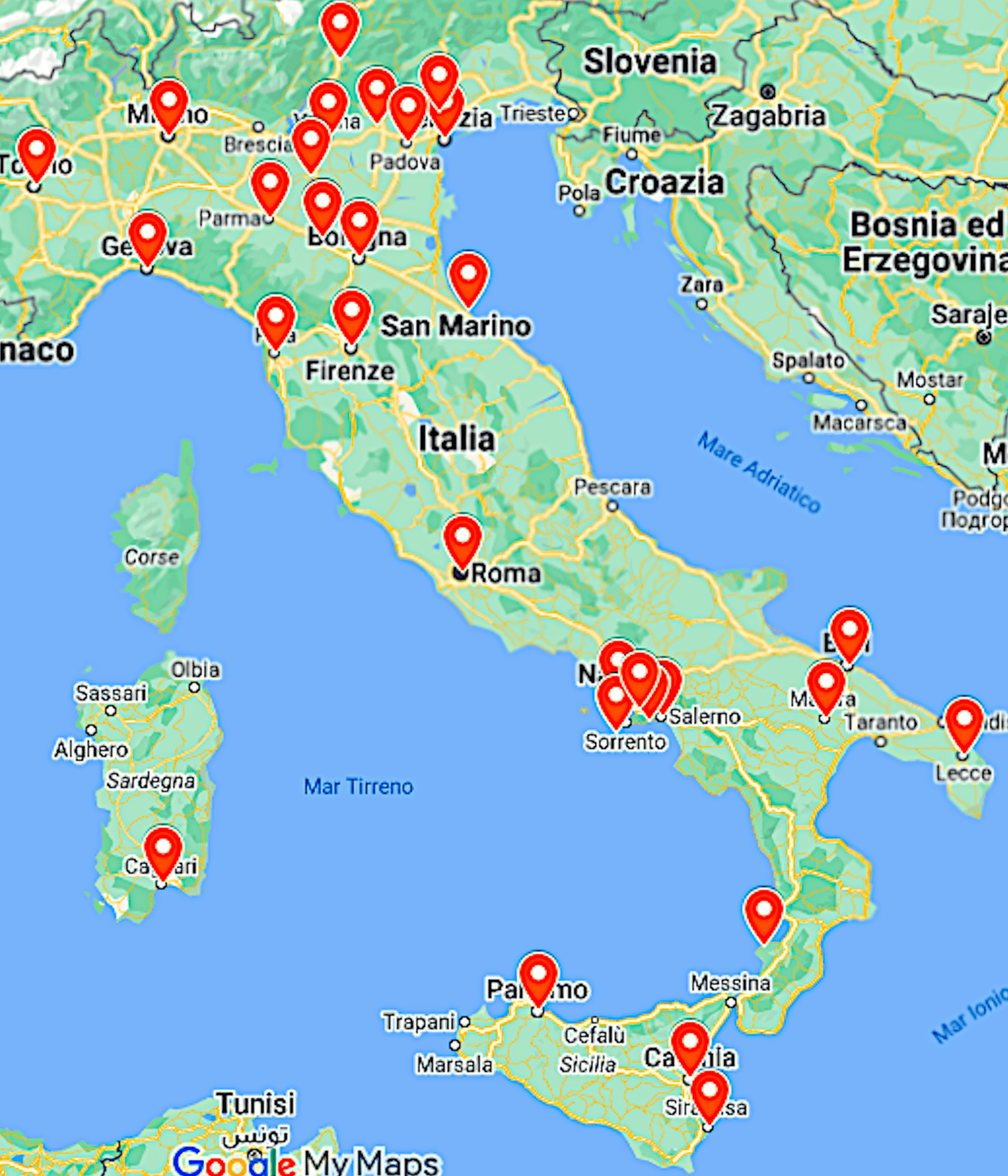
Some cities have introduced an Eco-Pass system. Visitors must therefore pay a “pass” (e.g. the “Area C Pass” in Milan), which generally costs around €5-7, to access the city centre. You will find this Eco-Pass system in cities such as Milan, Bologna and Palermo, for example.
- In Milan in particular, access conditions and pricing have been adjusted since 2024 based on vehicle emissions.
2023 legislation in Piedmont related to touring tourism
Piedmont was one of the first Italian regions to officially recognize touring tourism.
In February 2023, new legislation governing accommodation facilities for touring tourism (campsites and motorhome areas) came into force. This regulation aims to raise the standards of accommodation facilities (campsites and motorhome service areas) in order to meet the growing demand from outdoor tourism.
- At the same time, the Piedmont region continues to actively develop infrastructure dedicated to motorhomes, particularly “Aree di Sosta”, which are service areas specifically designed for parking and accommodating leisure vehicles. These areas, often located near city centers or tourist sites, generally offer essential services such as drinking water supply, wastewater disposal, and sometimes electricity.
- Since 2024, there has been a noticeable improvement in these facilities, with higher quality standards and better distribution across the region, making motorhome travel easier.
Since 2025, other Italian regions have begun to follow this model, with similar projects aimed at upgrading infrastructure for motorhomes.
Mandatory equipment and specific rules to know
Before setting off on a motorhome trip in Italy, it is essential to ensure that you have the required equipment on board. As with cars, you must carry a reflective safety vest and a warning triangle in case of emergency stops. In addition, dipped headlights must be used at all times outside built-up areas, even during the day.
Regarding winter conditions, Italy enforces strict regulations in many regions. Between November 15 and April 15, it is often mandatory to have winter tires fitted or snow chains on board, even if weather conditions are favorable.
- These requirements vary by province and are indicated by road signs, so it is important to remain vigilant.
In terms of fuel, Italy has a well-developed network of stations offering LPG (liquefied petroleum gas), which is useful for some motorhomes. However, note that some underground parking facilities may prohibit LPG vehicles for safety reasons. Always check signage before entering.
Finally, in cities and on certain secondary roads, be mindful of vehicle size restrictions, particularly regarding height, width, and length. Many historic centers, parking areas, and narrow roads impose limits (for example 2 m or 2.10 m height restrictions), which can be difficult to anticipate. It is therefore advisable to plan your route in advance and choose areas suitable for motorhomes.
Motorhome regulations in Italy: checklist before departure
Before your road trip in Italy, here is a checklist of things to verify:
- ✔️ The appropriate driving license for your motorhome
- ✔️ Your vehicle’s Euro emission standard
- ✔️ LEZ and ZTL restrictions in the cities you plan to visit
- ✔️ Mandatory equipment on board
- ✔️ Winter tire or snow chain requirements
- ✔️ Available parking and service areas along your route
- ✔️ Any height or traffic restrictions
Planning a road trip in Italy? Discover our bonus itinerary for a special Italian journey here!
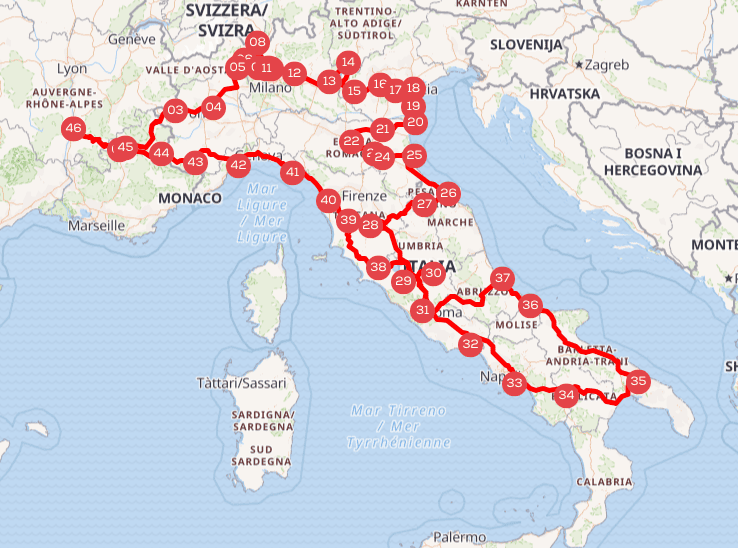
In addition to this great itinerary, explore other routes shared by the community, such as “Friuli Venezia Giulia: a journey through Italy’s green lung”, “The wonderful Abruzzo coastline by motorhome: the Trabocchi Coast”, and much more!
Did you enjoy the CaraMaps travel experience and community tips? Share your best memories or photos from your trip, and more, using the 100% collaborative CaraMaps app 😊
Follow us on Instagram @caramaps to discover incredible spots, and on Facebook to find new service areas, itineraries, and the latest motorhome news every day!
Also check out our other blog articles: “Motorhome rules and regulations in France in 2026” and many more!
👇 Find below the answers to the most frequently asked questions about motorhome regulations in Italy.