Algarve by motorhome is one of the easiest winter escapes in Europe: the south coast of Portugal is mild compared with northern Europe, the towns stay open all year, and a west-to-east route from Lagos through Albufeira to Tavira gives you cliffs, beaches, old towns and a lagoon in a single trip. Allow roughly a week, or more if you like to linger. This guide takes you stage by stage, lists the CaraMaps spots for each stop, and finishes with practical advice on rain, cold nights and the rules to check before you go.
The route runs from west to east, so you travel with the coast opening up ahead of you and finish in the quieter, flatter eastern Algarve. You can of course reverse it. Winter is a good time for it: the beaches are not crowded, the walking is comfortable and the small towns feel lived in rather than staged for holidaymakers.
When to go and how long to allow
Winter in the Algarve means a very different coast from the summer one. Days can be bright and pleasant for walking, but this is still winter: expect some rain, windy spells and cool evenings once the sun goes down. For general figures on temperatures, sunshine and rainfall by month, check the Met Office Algarve weather page shortly before you travel rather than relying on a single average.
A week gives you about two nights or more in each area with time to spare. If you have two or three weeks, you can stay longer, add rest days and wait out any wet weather. Because the three stages are close together, the driving days are short; the real planning is about where you want to stop and walk.
Stage 1: Lagos and Ponta da Piedade
Lagos is the natural start of this Algarve motorhome winter route. The old town has a walkable centre of narrow streets, small squares and old defensive walls, and the harbour area is pleasant for an unhurried coffee. In winter you can wander without the summer crowds and enjoy the town at its everyday pace.
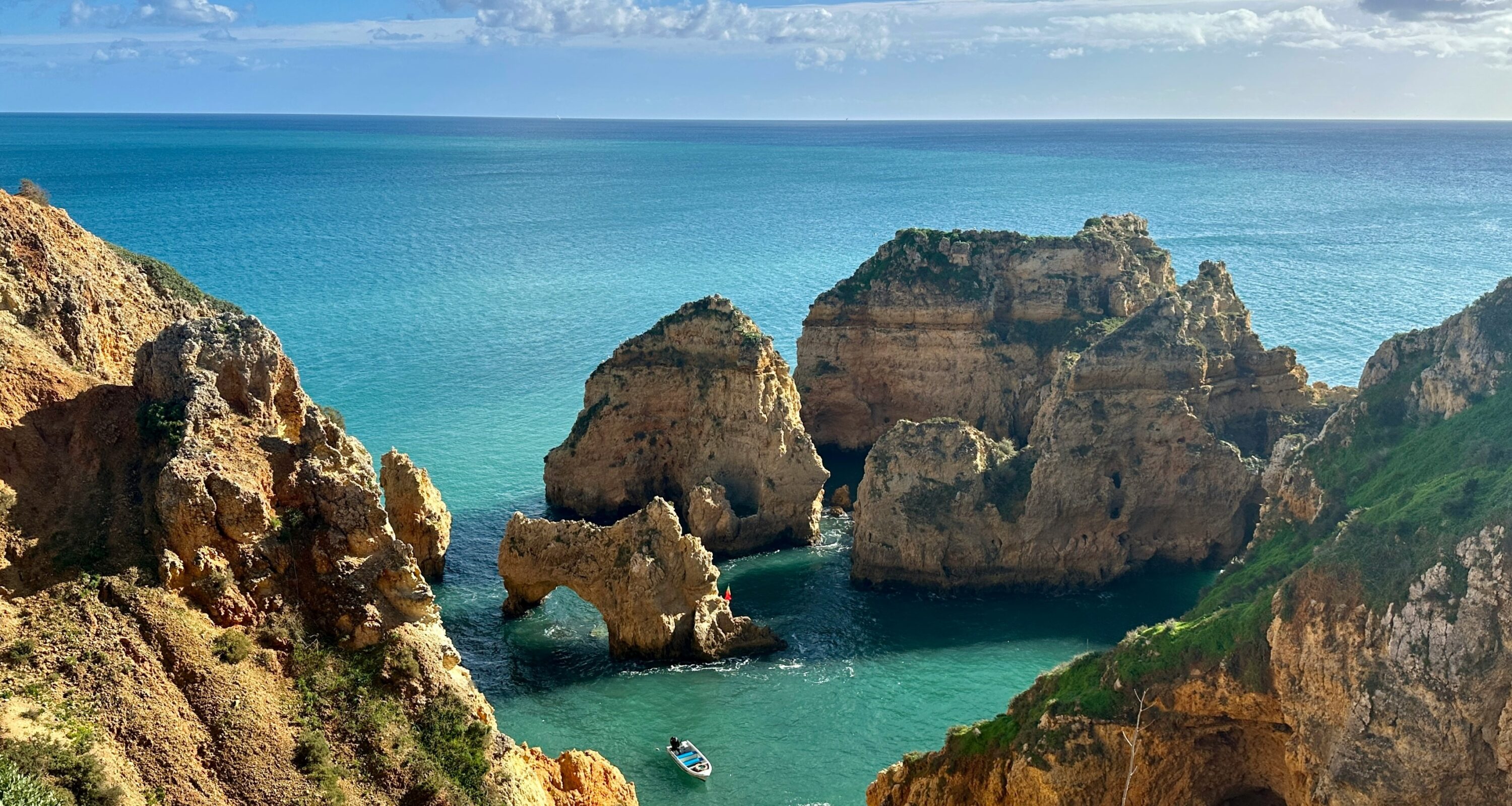
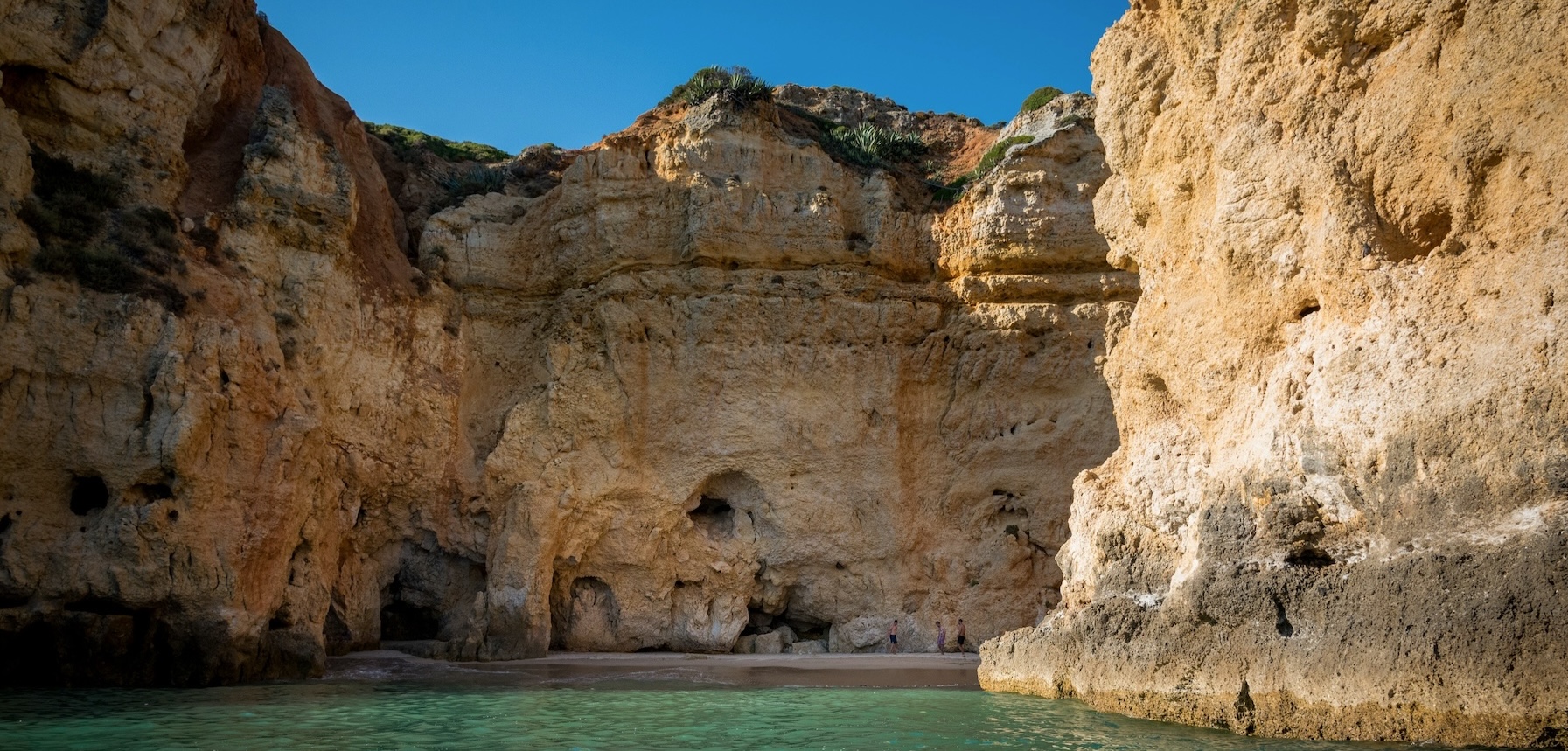
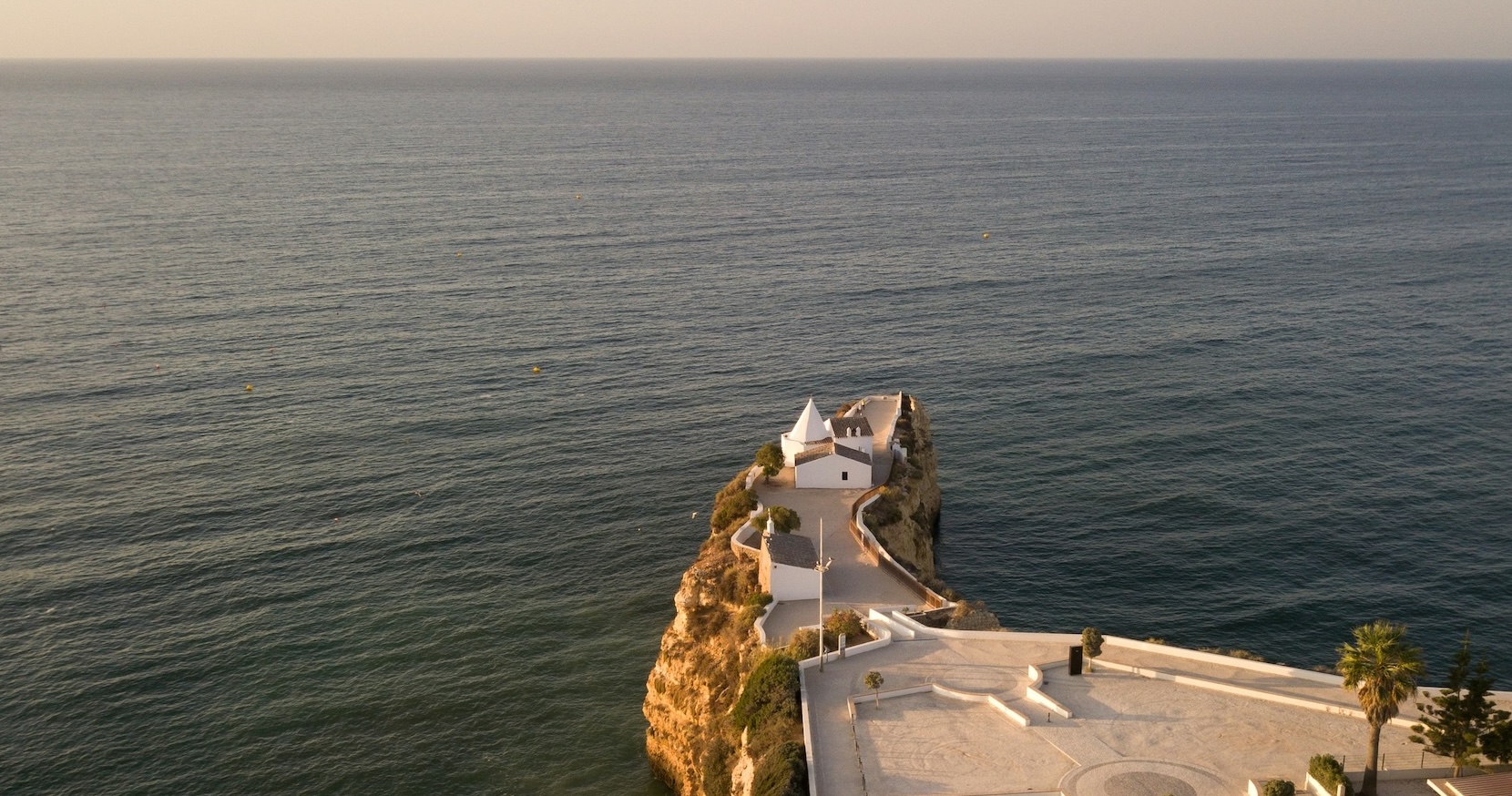
The highlight just outside town is Ponta da Piedade, a headland of golden sandstone cliffs, sea stacks and arches. A walk along the clifftop gives you views over the grottoes below, with the lighthouse at the tip. Boat trips into the grottoes are a popular way to see the rock formations from the water, though sea conditions in winter can limit what is possible, so ask locally on the day. Nearby beaches such as Praia Dona Ana are lovely for a bracing winter stroll.
Lagos is also a good base for easy coastal walking. Paths follow the clifftops east and west, and on a clear winter morning the light on the rock is excellent for photography. Keep well back from cliff edges, especially in wet or windy weather, as the ground can be unstable.
If you like variety, add a slower day in Lagos itself. The historic centre has small museums, churches and market streets that make a good plan for a showery afternoon, and the town’s relaxed winter rhythm suits travellers who want to unwind before the next leg. Put your walking boots on for the morning and save the town for later in the day, when the light is softer.
CaraMaps spots for this stage:
- Parque de Campismo Obertur – Valverde, Estrada da Praia da Luz, 8600: campsite; the listing doesn’t detail services.
- Camping Trindade, Estrada da Ponta da Piedade, 8600-315: campsite with 50 pitches; the listing doesn’t detail services.
- Parking Farol da Ponta de Piedade, 8600: car park with 15 places; the listing doesn’t detail services.
Stage 2: Albufeira and Falésia
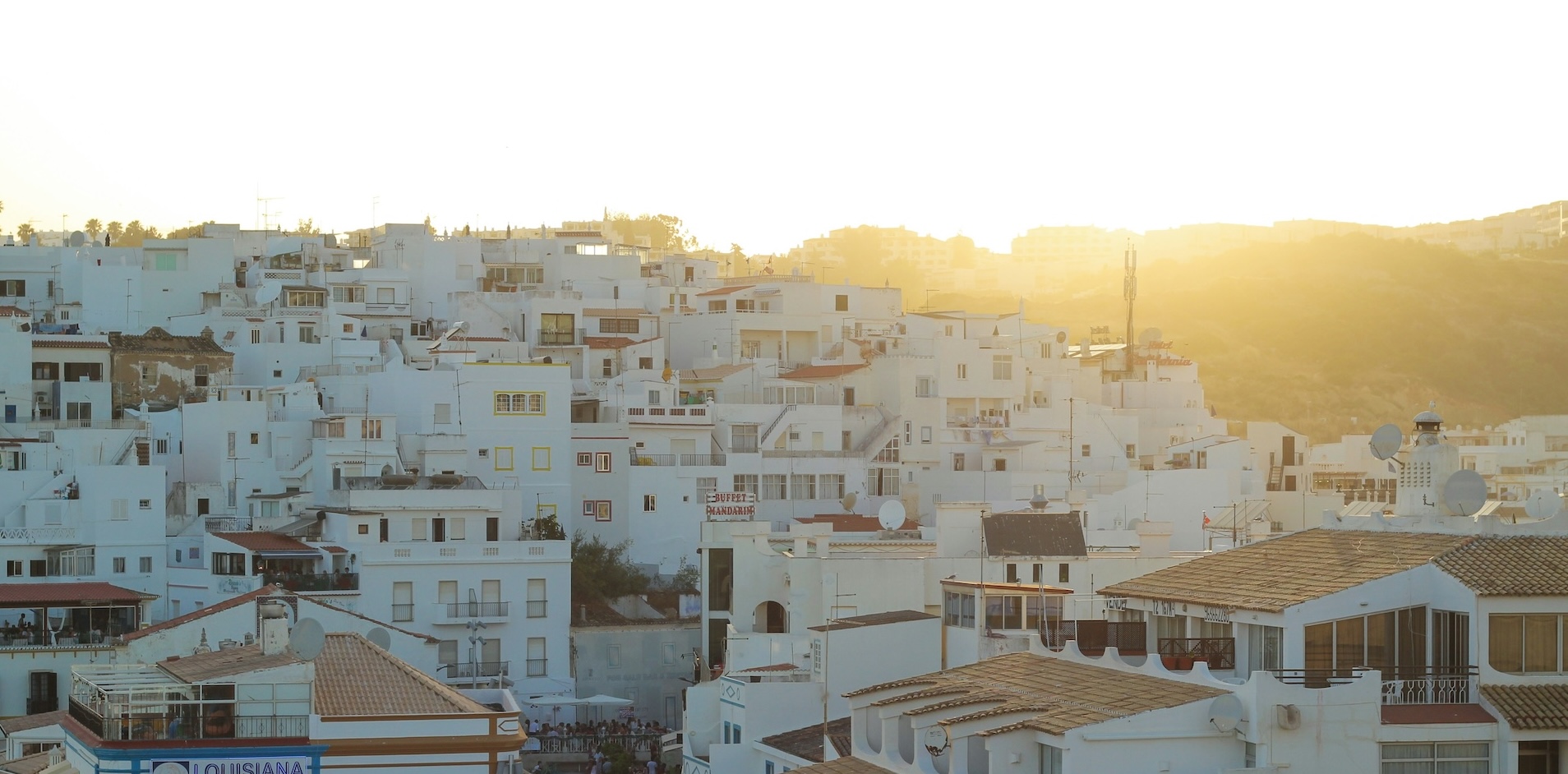
Heading east, Albufeira is the Algarve’s best-known resort town, and winter shows a different side of it. The old town, with its steep streets running down to the beach, is far calmer than in high season, and the seafront promenade is good for an easy walk. Some businesses reduce their hours or close for the low season, so do not assume everything will be open.
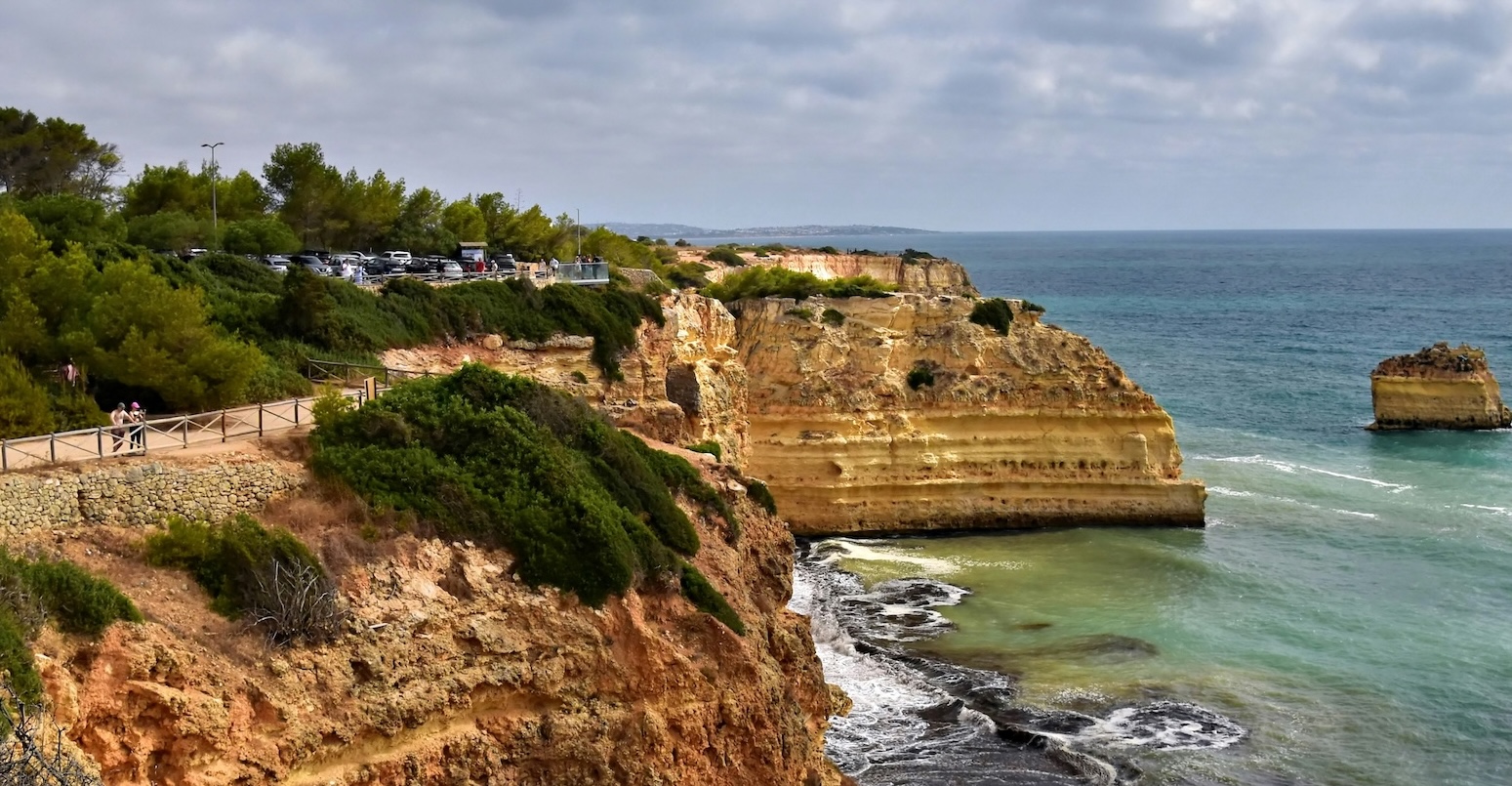
The big draw for walkers is the stretch of coast around Praia da Falésia, named for its striking red, orange and ochre cliffs. The long beach below them is wide and open, ideal for a long winter walk on firm sand when the tide allows. The contrast between the coloured cliffs, pale sand and Atlantic is at its best in low winter light.
This stage suits a slower pace. Spend a day on the old town and the beach, another on the cliff walks, and keep a spare day for the weather. Albufeira is also convenient if you want shops and a wide choice of restaurants after the quieter stretches either side of it.
Between Albufeira and Falésia the coast is a patchwork of cliff-backed coves, so even a short drive offers a new view. Pack a windproof layer: on the open beaches the breeze can feel sharp in winter even when the sun is out, and a thermos of something hot makes a long beach walk far more enjoyable.
CaraMaps spots for this stage:
- Algarve Motorhome Park Falésia, R. do Pinhal 2, 8200-593: private area with 100 places; the listing doesn’t detail services.
- Quinta da Palmeira Motor Home RV park, 29 Rua da Palmeira, 8200: private area with 90 places; the listing doesn’t detail services.
- Camping Albufeira, Estrada de Ferreiras, 8200-555: campsite; the listing doesn’t detail services.
Stage 3: Tavira and the Ria Formosa
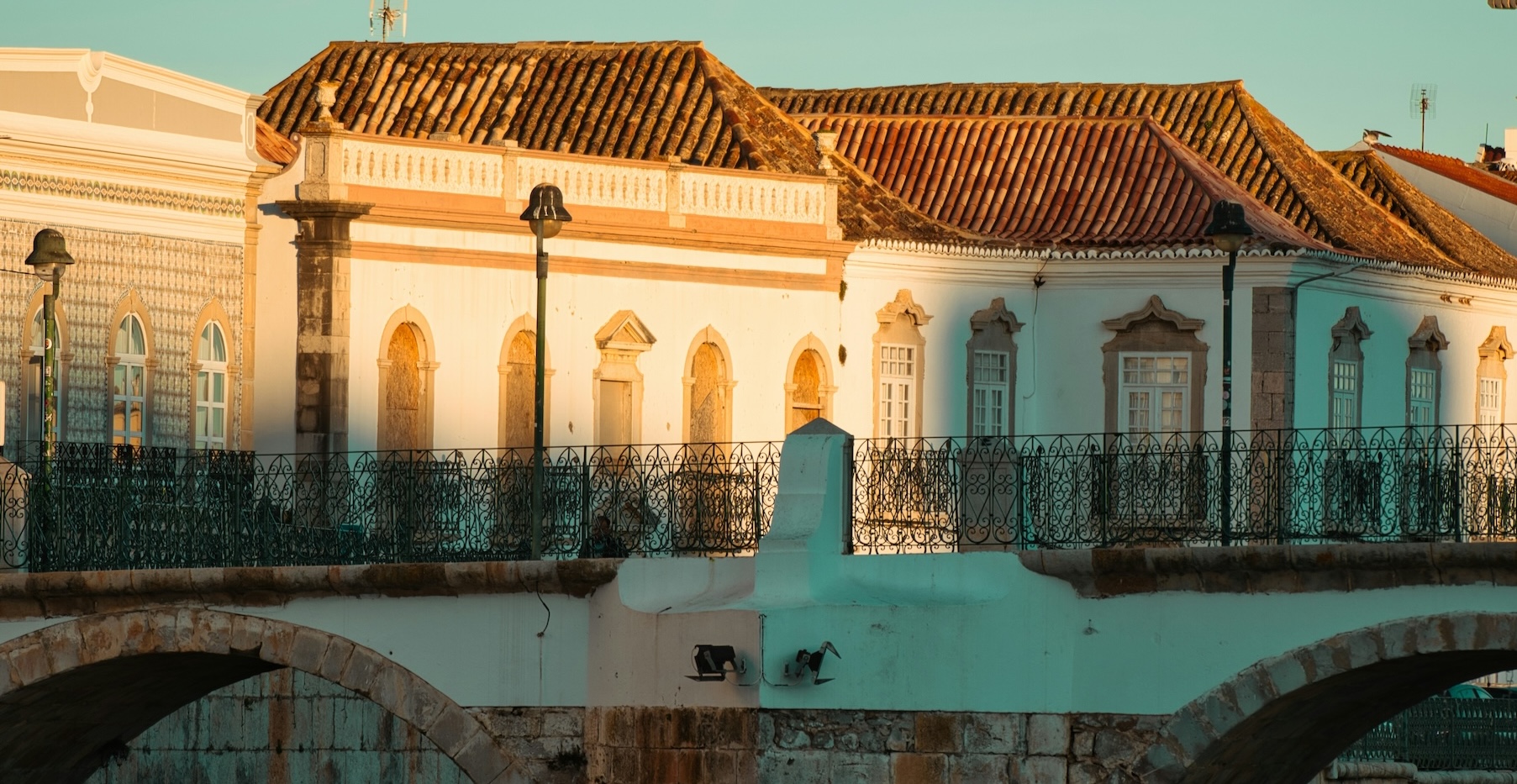
The last stage takes you to the eastern Algarve, where the landscape softens. Tavira is often called one of the region’s prettiest towns: a river runs through its centre, crossed by an old Roman-style bridge, and the streets above are lined with whitewashed houses and churches. It is a town for walking without a plan, and winter keeps it peaceful.
Just offshore lies the Ria Formosa, a protected system of lagoons, channels, salt marshes and sandy barrier islands that is important for birdlife. Ilha de Tavira, one of the islands, is reached by a short boat crossing and offers long, quiet beaches that feel especially empty in the cooler months. Check the ferry schedule locally, as winter timetables can differ from summer ones.
If you enjoy slow travel, the lagoon edge is a good place for a gentle bike ride or birdwatching walk. This is also a good place to end the route: it is calmer, the pace is gentler and the Spanish border is not far if you want to carry on east.
Tavira also rewards a slow day on foot. Cross the river, follow the lanes up towards the castle gardens for views over the rooftops, and finish at the waterfront as the light fades. Markets and local cafés give you a feel for everyday Portuguese life, far from the busier resort strips further west, and winter is the season when that side of the Algarve is easiest to enjoy.
CaraMaps spots for this stage:
- Algarve Motorhome park Tavira, Rua Vale de Caranguejo, 8800-467: private area with 120 places; size limit of 10 m shown on the listing; the listing doesn’t detail services.
- Campismo ria Formosa, 23a Rua 12, 8800-593: campsite with 350 places; the listing doesn’t detail services.
- Quinta da Eira Antiga, 8800-510: private area; the listing doesn’t detail services.
- Parque de Campismo PSP, Estrada da 223, 8800: campsite; size limit of 15 m shown on the listing; the listing doesn’t detail services.
Budget
Winter is generally the cheaper side of the year for travelling in the Algarve, but costs vary with your vehicle, how often you eat out and how much you drive. Rather than rely on figures that may be out of date, check the current conditions on each listing and with the site directly. Fuel is the main variable on a route this compact, since the daily distances are short; the bigger savings come from staying a few nights in each place instead of moving every day.
A few habits make the whole trip smoother. Fill the fuel tank before heading into town, keep a small supply of food for days when the weather keeps you inside, and download offline maps in case the signal drops on rural lanes. Check your tyres and lights before setting off, since you may drive in rain and at dusk more often than in summer, and give yourself extra braking distance on wet roads.
Practical tips for the Algarve in winter
Rain. Winter is the wetter season in the south of Portugal. Spells of rain can be heavy, even if the weather is bright the next day. Keep a flexible plan with a spare day per stage, and avoid parking in low ground or beside dry watercourses when heavy rain is forecast. Unsurfaced ground can turn soft, so look carefully at the surface before you pull onto it.
Cold nights. Days can feel mild, but nights and early mornings are noticeably cooler, and a motorhome loses heat quickly after dark. Bring warm bedding and check that your heating works before you leave. If you rely on gas, work out how much you will use for heating as well as cooking, carry a spare cylinder that fits your system, and remember that not every cylinder type from home can be refilled abroad: check your adaptor setup beforehand.
Water. In cooler weather, exposed pipes and tanks are more at risk, so keep your water system protected where you can and drain what you will not use. If you are unsure about the facilities at a stop, contact the site before you arrive, as the listings don’t detail services.
Overnight rules. Overnight stays with a motorhome in Portugal are regulated by national law and by local bylaws, and the rules can differ from one municipality or protected area to another. Check them before you go and again for each place you stop. Algarve authorities have been encouraging motorhomers to use official sites: see the Portugal Resident article “Make the best choice”: Algarve urges motorhomers to park up at official sites. For an overview of the rules, see our guide to Motorhome Regulations in Portugal in 2026.
Driving. Coastal roads between the three towns are straightforward, but town centres and old-town streets can be narrow. Check your vehicle’s length and height against any restrictions shown on listings (two of the Tavira listings show size limits), and leave the motorhome outside the historic centres when you explore.
Keep planning
- Motorhome Regulations in Portugal: all you need to know (2026)
- Portugal by motorhome, an ideal and authentic destination
- The most beautiful motorhome areas in Portugal
- 5 roadtrips to spend winter in the sun in your motorhome
- Go on a motorhome trip off season