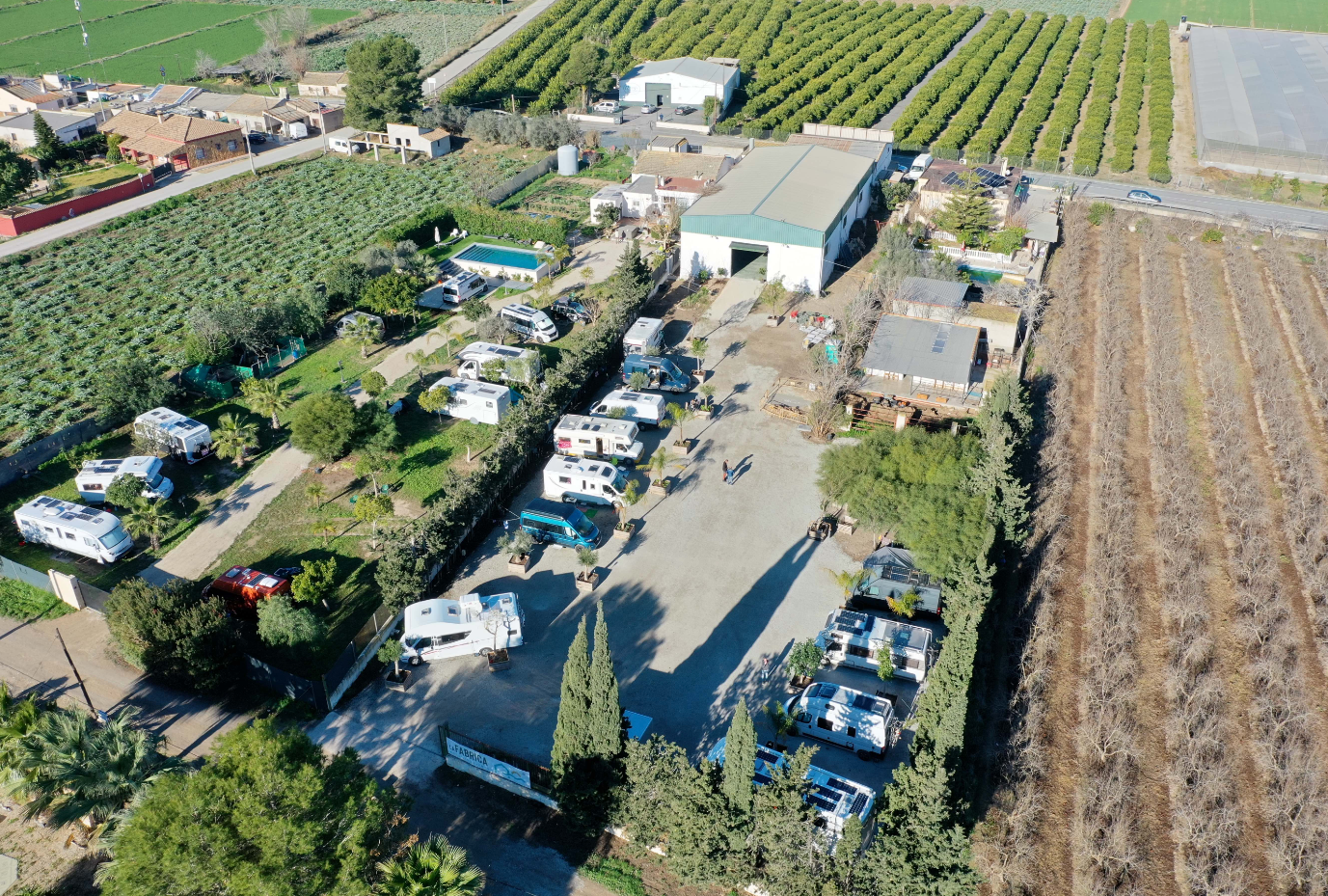
Are you planning a campervan trip to Spain? Would you like to update yourself on the legislation currently in force for motorhomes in this country? Discover in this article everything you need to know about motorhome regulations in Spain!
Motorhome regulations in Spain: driving and parking
Driving a motorhome
What driving licence is required to drive a motorhome in Spain?
If you plan to drive a motorhome weighing 3.5 tonnes or less in Spain, your standard category B driving licence will be sufficient. However, if you wish to drive a motorhome over 3.5 tonnes, you will need at least a C1 licence.
Is there a specific Highway Code for motorhomes?
In Spain, motorhomes, including those weighing less than 3.5 tonnes, fall under the M1 vehicle category (vehicles designed for the transport of passengers, with a maximum of 8 seats in addition to the driver), just like a regular car. However, this category alone does not define all traffic rules! Speed limits for motorhomes mainly depend on their weight.
For reference, here are the current speed limits for motorhomes under 3.5 tonnes in Spain:
- 50 km/h in built-up areas
- 80 km/h outside built-up areas (secondary roads)
- 90 km/h on dual carriageways
- 120 km/h on motorways and autovías
Motorhomes over 3.5 tonnes must comply with different regulations:
- 50 km/h in built-up areas
- 80 km/h outside built-up areas (secondary roads)
- 90 km/h on motorways and autovías
What toll fees apply when travelling by motorhome in Spain?
Toll prices vary depending on the region, the time of travel and the category of your vehicle. You can find detailed pricing information for each motorway and vehicle category here. There are currently three main vehicle categories for tolls in Spain:
- Ligeros (light vehicles)
- Pesados 1 (heavy vehicles 1)
- Pesados 2 (heavy vehicles 2)
In general, motorhomes pay the same toll rates as light vehicles on Spanish motorways. If you are unsure about your vehicle category, it is recommended to consult the official motorway operators’ websites. In recent years, the Spanish motorway network has undergone significant changes. Since 2024, several previously toll roads have become free, although some sections remain tolled, particularly around major metropolitan areas.
It is still easy to travel across the country using free roads. Just keep in mind that these routes are often more congested, especially during the summer period.
Motorhome parking in Spain
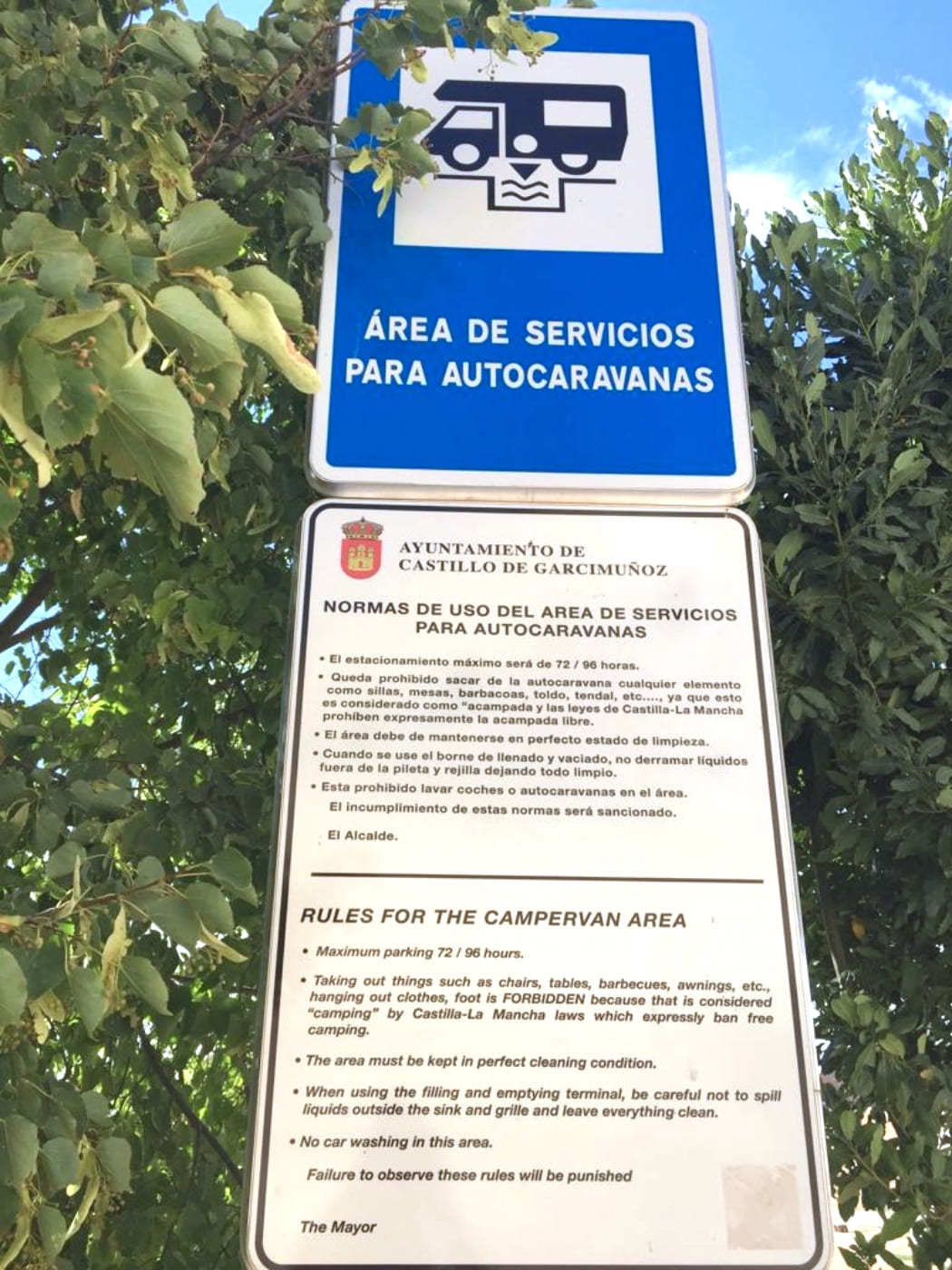
In Spain, motorhome drivers are subject to the same parking rules as car drivers. This principle was clarified in 2023 when the Dirección General de Tráfico (DGT) updated the regulations to better define motorhome use.
This reform introduced a clear distinction between parking and camping, a concept that had previously been open to interpretation.
Since this clarification, motorhome parking falls under the Highway Code, while camping is regulated under tourism laws. A motorhome is considered to be parked if it meets the following three conditions:
- The only contact between the motorhome and the ground is through its wheels.
- The space occupied by the motorhome does not exceed the vehicle itself (no external equipment such as tables, chairs, or leveling blocks, depending on local regulations).
- The roof may be opened as long as it does not extend beyond the vehicle’s perimeter. Sleeping inside the vehicle is also permitted.
- The motorhome must not emit any fluids or waste.
As of 2026, these criteria serve as a national reference. However, some municipalities continue to apply stricter local regulations, particularly in tourist or coastal areas.
- The new PROT 2026/04 instruction from the DGT strengthens the powers of municipalities to limit parking duration, prohibit overnight stays, or restrict the presence of motorhomes in certain areas (especially coastal and tourist zones). Many stricter local regulations are in force in 2026.
To avoid any inconvenience, it is recommended to use designated motorhome service areas or campsites. The CaraMaps app helps you easily find suitable locations and travel with peace of mind! You can also read our article “Parking with your motorhome in Spain: things to know 🚍🇪🇸” to learn more about the regulations.
Wild camping in a motorhome in Spain
Historically, wild camping was regulated at the national level by a 1966 law, which was repealed by Royal Decree 39/2010. Since then, regulation has been delegated to the Autonomous Communities, which may in turn allow municipalities to set their own rules. Local authorities therefore have the final say on whether wild camping is permitted in their areas.
As a result, while some regions tolerate wild camping, it can lead to heavy fines in others. It is advisable to check with local authorities before attempting to wild camp in a motorhome.
- In general, wild camping is prohibited, except where locally tolerated.
- National parks and coastal areas are subject to particularly strict regulations and increased monitoring, especially during the summer season.
For example, wild camping is prohibited by decree in Aragon, with fines ranging from €600 to €6,000. In Asturias, it is also prohibited but considered a minor offence, with fines between €60 and €600. In the Balearic Islands, regulations appear more flexible, allowing it under certain conditions (distance from urban areas and limited duration), although controls have become stricter in recent years.
Since 2024, there has been a general trend toward increased enforcement and stricter application of local regulations, particularly in tourist and coastal areas. Some municipalities have also increased fines to deter illegal practices.
- As a result, it is becoming increasingly difficult to wild camp in Spain without risking penalties. For a stress-free trip, it is recommended to use designated service areas and authorised campsites.
Want to learn more about wild camping in Spain? Feel free to check out our blog article “The best places for wild camping in Spain”!
Evolution of motorhome regulations in Spain in 2026
Low Emission Zones (LEZ)
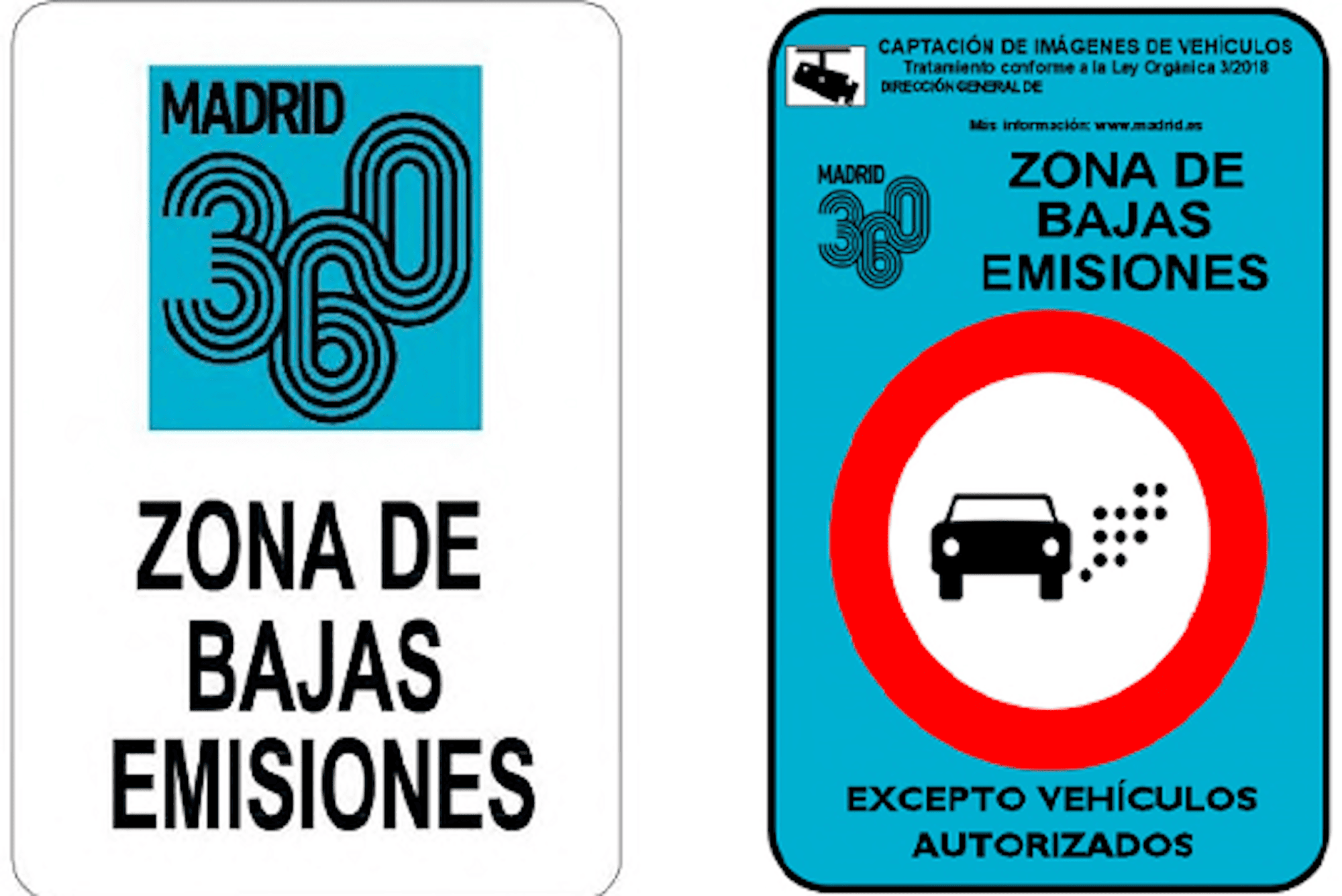
Since 2021, several low emission zones (LEZ or ZBE) have been gradually introduced in various cities across Spain. These zones aim to limit or prohibit access for the most polluting vehicles, identified by environmental stickers. The goal is to reduce greenhouse gas emissions. This initiative, seen across Europe, is part of the 2015 Paris Agreement.
Following the implementation of Spain’s climate change law, the rollout of LEZs accelerated significantly between 2023 and 2026. What initially applied to only a few major cities has, by 2026, become a widespread measure across urban areas in Spain.
- The regulation required all municipalities with more than 50,000 inhabitants to establish a LEZ by the end of 2023.
- In practice, by 2026, the vast majority of these cities have implemented such zones, although enforcement levels vary significantly.
At the beginning, only around a dozen cities (Madrid, Barcelona, Seville, Zaragoza, Pamplona, etc.) had LEZs. Since then, many more cities have adopted them, including Valencia, Bilbao, Malaga, Alicante, Granada and Valladolid.
- Each municipality defines its own access rules and geographical boundaries for these zones.
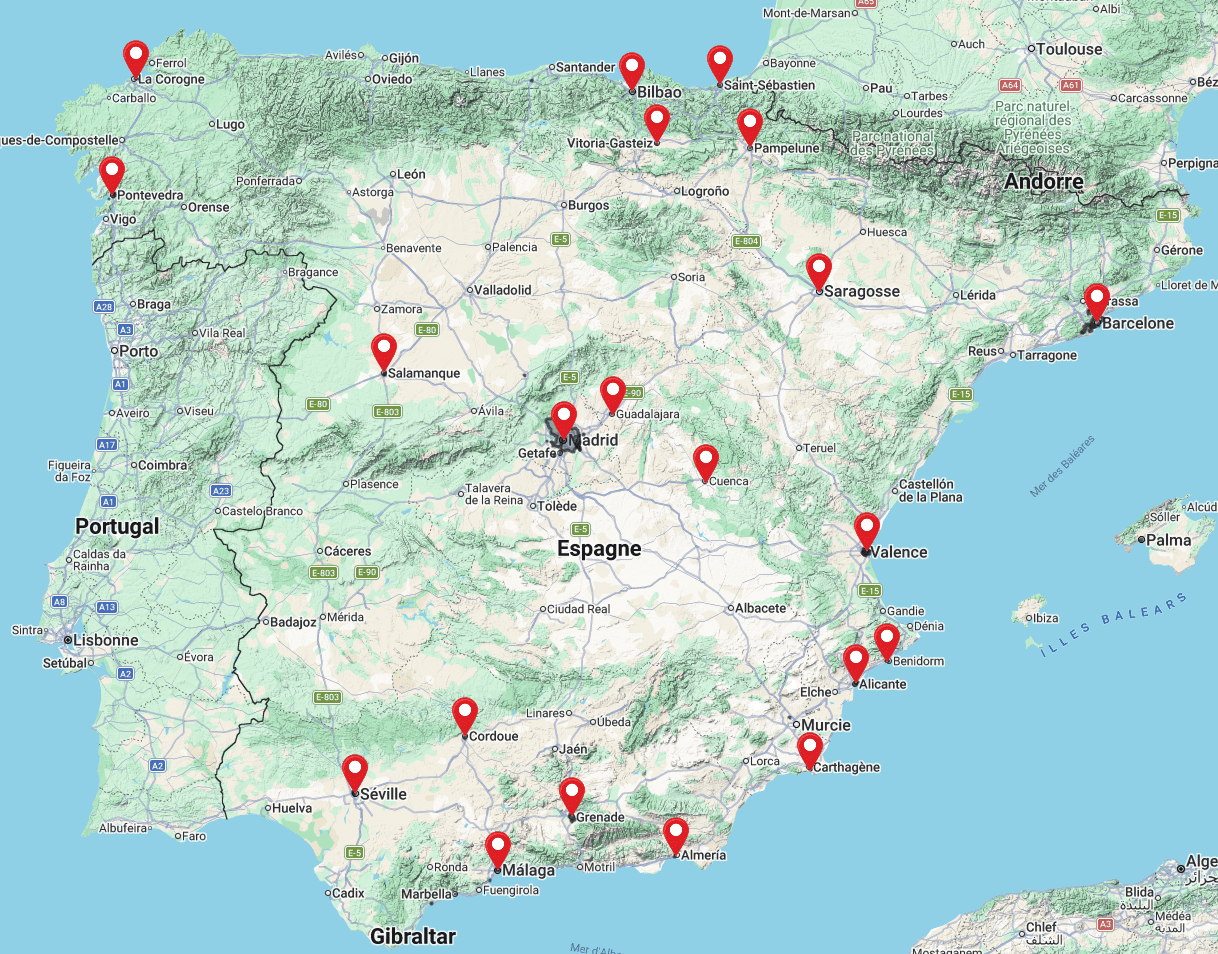
In the cities concerned, it is the responsibility of drivers to comply with the applicable environmental requirements. The system is based on DGT environmental stickers: 0, ECO, C, B and no sticker (equivalent to A). Vehicles without a sticker, generally the oldest ones, are the most restricted, and their access to LEZs is often prohibited.
- To find out which sticker your vehicle requires, visit the DGT website here!
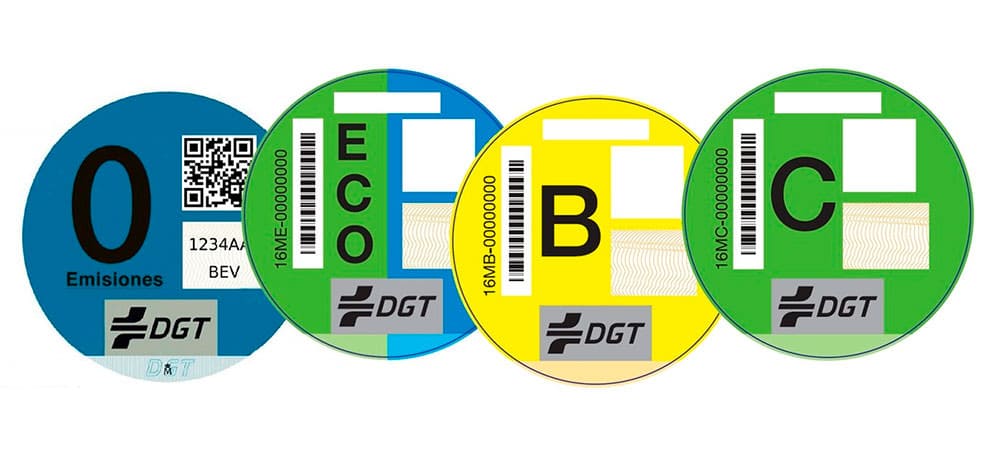
Please note: vehicles registered abroad, including most French motorhomes, do not automatically receive a Spanish environmental sticker. In some major cities such as Madrid or Barcelona, it is necessary to register online before entering a LEZ, providing details such as the vehicle’s Euro emission standard. Failure to do so may result in denied access or fines.
The rules then vary depending on the city. In Barcelona, access to the LEZ is prohibited for the oldest vehicles on weekdays, while in Madrid, certain central areas are completely closed to vehicles without specific authorization. In other cities such as Valencia or Seville, restrictions may be limited to certain districts or time slots.
- In practice, it is often recommended to avoid city centres with a motorhome, even a recent one. Instead, use peripheral parking areas or dedicated service areas, and then rely on public transport to reach the city centre.
Finally, enforcement is now largely automated in many cities through license plate recognition systems. In case of infringement, fines generally range from €100 to €200, with higher penalties for repeat offences.
- Please note: these fines can be sent directly to your home address, including abroad, several weeks after your visit. It is therefore important to check local regulations before entering a LEZ.
Increasingly strict restrictions for motorhomes
In 2023, the authorities in Menorca adopted a law related to the island’s biosphere reserve, aimed at limiting vehicle access during the summer period. This measure applied to both cars and motorhomes and had a dual objective: protecting the environment from growing pollution and responding to pressure from residents, who felt overwhelmed by the seasonal influx of visitors.
Since then, this type of regulation has been progressively strengthened. By 2026, access to Menorca is regulated through seasonal quotas, with a reservation system required for certain vehicles. Other island or highly tourist-oriented territories have implemented or are considering similar measures.
More broadly, across the country, tensions have increased in recent years between travelling tourists and local municipalities. Faced with rising visitor numbers, some municipalities have taken steps to limit the presence of motorhomes, even going as far as closing parking areas or service points.
- The municipality of Cunit, in Catalonia, is one such example: it has sought to restrict motorhome parking along the seafront, arguing that some users do not comply with basic parking rules.
- This trend intensified significantly between 2025 and 2026, with a growing number of municipal decrees imposing stricter parking regulations: limited duration, overnight bans, or restrictions in sensitive areas, particularly along the Mediterranean coast.
- For more information, consult the DGT website, including the latest PROT 2026/04 instruction.
In this context, motorhome regulations in Spain have generally become stricter and more complex. It is therefore essential to check local rules in advance for each municipality you plan to visit.
To travel with peace of mind, don’t hesitate to download the CaraMaps app to find the best spots during your motorhome trip in Spain!
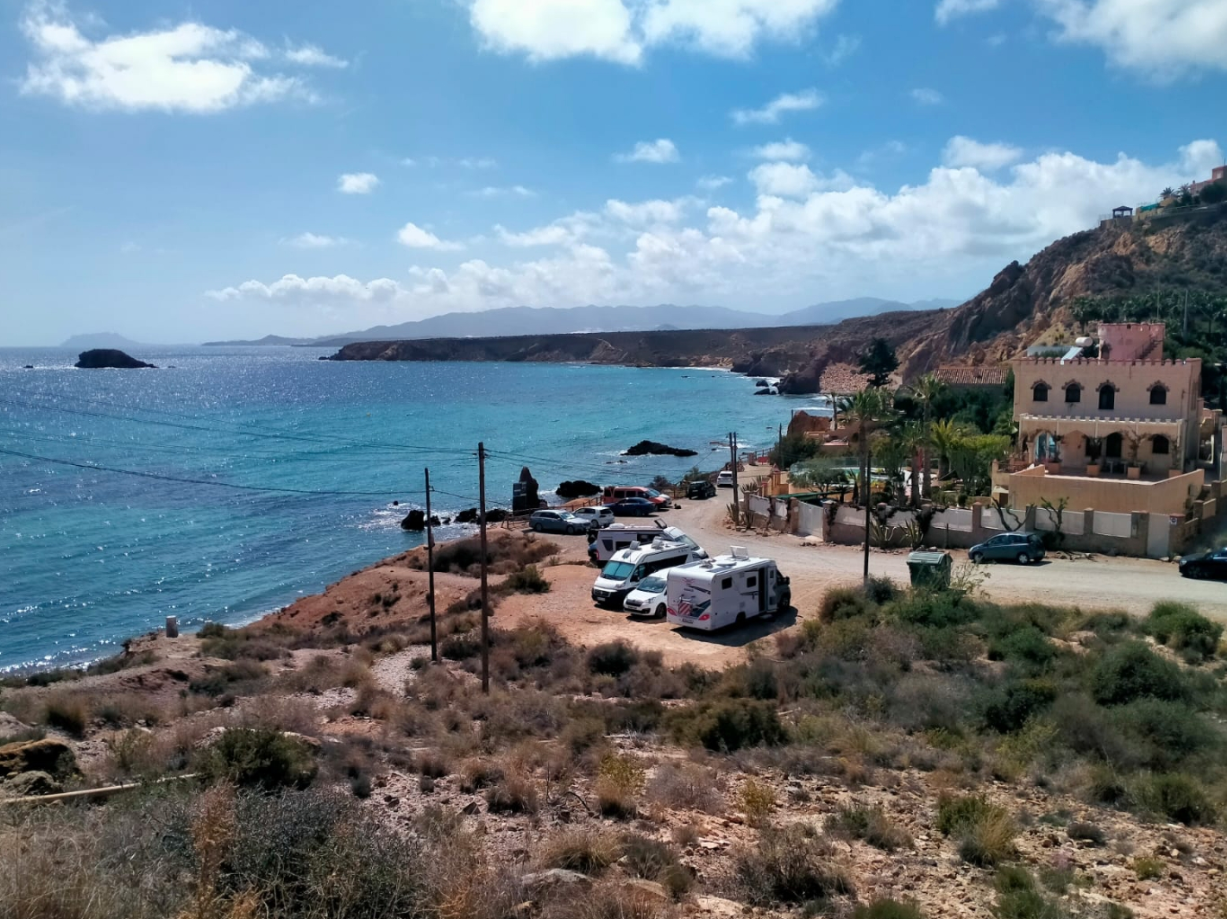
Mandatory equipment and specific rules to know
Before setting off on the road in Spain with a motorhome, it is essential to ensure that you have the required equipment on board. As with cars, you must have a high-visibility safety vest and a warning triangle in case of breakdown. A regulatory change is underway: the triangle is gradually being replaced by a V16 warning light (beacon). Warning triangles are still accepted for tourists, although the DGT strongly encourages the use of the V16.
Other useful or required equipment depending on the situation:
- First aid kit (strongly recommended)
- Fire extinguisher (recommended for motorhomes)
- Tyres suitable for winter conditions in mountainous regions (snow chains or winter tyres often required depending on the province)
Regarding fuel, Spain has a well-developed network of service stations. LPG (called “GLP”) is available at many stations, which can be useful for certain motorhomes. However, access to some underground car parks may be restricted for LPG-powered vehicles, so always check signage before entering.
Finally, in cities and on some secondary roads, it is important to be aware of size restrictions. Many historic centres, car parks or narrow roads impose limits on height, width or length, which can sometimes be difficult to anticipate. It is therefore recommended to plan your route in advance and choose areas suitable for motorhomes.
Additional practical advice:
- Respect weight and load limits (frequent roadside checks)
- Maximum blood alcohol level: 0.5 g/l (0,3 g/l for novice drivers or drivers under 25)
- Adapt your driving to the size of the vehicle (crosswinds, turning radius, longer braking distance)
Motorhome regulations in Spain: checklist before departure
Before your road trip in Spain, here is a list of things to check:
- ✔️ The appropriate driving licence for your motorhome (B or C1)
- ✔️ Parking rules (parking vs camping)
- ✔️ Local parking restrictions (especially in tourist and coastal areas)
- ✔️ Mandatory equipment on board (vest, triangle or V16 beacon)
- ✔️ Low Emission Zones (LEZs) along your route
- ✔️ Pre-registration for LEZs if you have a foreign vehicle
- ✔️ Your vehicle’s Euro emission standard
- ✔️ Available service areas and campsites along your route
- ✔️ Traffic or access restrictions in certain cities (historic centres, size limits)
- ✔️ Local rules regarding wild camping
- ✔️ Specific restrictions in island or highly tourist areas (Balearic Islands, Menorca, etc.)
Planning a road trip in Spain? As a bonus, discover our dedicated Spain itinerary here!

In addition to this itinerary, explore other routes shared by the community, such as “Spanish Summer: a great journey through the Rías Baixas”, “From the Costa Brava to the Costa del Sol by motorhome”, and many more!
Did you enjoy your travelling experience with CaraMaps and the community’s tips? Share your best stories and photos from your trip directly through the 100% collaborative CaraMaps app 😊
Follow us on Instagram @caramaps for incredible spots, and on Facebook for daily updates on new locations, itineraries and motorhome news!
And don’t forget: experience your journey with CaraMaps!