
Leisure vehicles attract more and more enthusiasts every year. The desire to travel without constraints, to be more independent, and to wake up in a different place each day are just some of the reasons why people are drawn to this type of road trip lifestyle. While it’s undeniable that travelling in a motorhome (or any other leisure vehicle) offers a great sense of freedom, travelers should still be aware that regulations do exist, both for driving and parking. That’s why it’s important to stay informed about these rules to avoid any unpleasant surprises during your trip!
In this article, discover everything you need to know about motorhome regulations in France in 2026!
Overview of motorhome regulations for driving and parking
Driving a motorhome
What license do you need to drive a motorhome?
If you plan to drive a motorhome weighing 3.5 tonnes or less, your standard category B driving license will be sufficient! Most leisure vehicles on the market (motorhomes, campervans, converted vans, etc.) do not exceed this weight. However, if you intend to drive a vehicle over this limit (category N2 or M2), you will need to obtain a C1 license (or hold the B79 “grandfather rights” code for licenses issued before 1975).
Even though driving a motorhome doesn’t require a special license in most cases, keep in mind that some time will be needed to get used to the size and handling of the vehicle!
Is there a specific Traffic Law for motorhomes?
Well, the answer is no! The same Highway Code that applies to cars also applies to motorhomes. Speed limits are therefore the same, with of course some nuances (rain, towing a trailer, etc.).
On the other hand, motorhomes weighing more than 3.5 tonnes must follow different speed regulations:
- 110 km/h on motorways
- 100 km/h on dual carriageways separated by a central barrier
- 80 km/h on other roads (national and departmental roads)
For vehicles over 3.5 tonnes, displaying speed limit stickers (110, 100 and 80) on the rear of the vehicle may be required in certain cases. Additionally, the “Angles Morts” (blind spot) stickers are mandatory for vehicles over 3.5 tonnes in France.
In addition, driving vehicles over 3.5 tonnes in urban areas also comes with specific rules. You will need to pay attention to restrictions or detour requirements related to weight. For example, lighter vehicles generally have priority when passing is difficult. Also remember to maintain a safe following distance (equivalent to at least 2 seconds) from the vehicle in front of you.
In general, always make sure to follow local motorhome regulations. Local authorities may impose restrictions specifically targeting vehicles of a certain size.
Please note: Checks on actual vehicle weight (overloading) have increased in recent years, particularly on motorways and in mountainous areas, to ensure compliance with the Maximum Authorised Mass (MAM), including any added equipment.
Vehicle insurance: the end of the Green Card
Since April 2024, the green insurance sticker on the windshield and the physical green card are no longer required in France for French-registered vehicles. Law enforcement now verifies insurance through the Insured Vehicles Database (FVA). However, for international travelers, it is still highly recommended to keep proof of insurance (International Motor Insurance Card), especially when travelling across borders.
What toll fees should you expect when travelling by motorhome?
Motorway toll fees are determined based on the vehicle’s PTAC (weight), its size (under or over 2 or 3 meters in height), and the number of axles. Most motorhomes fall into Class 2, but larger ones may be charged as Class 3. Make sure you know which toll category your motorhome falls into, as you could otherwise be overcharged.
Regulations for parking a motorhome
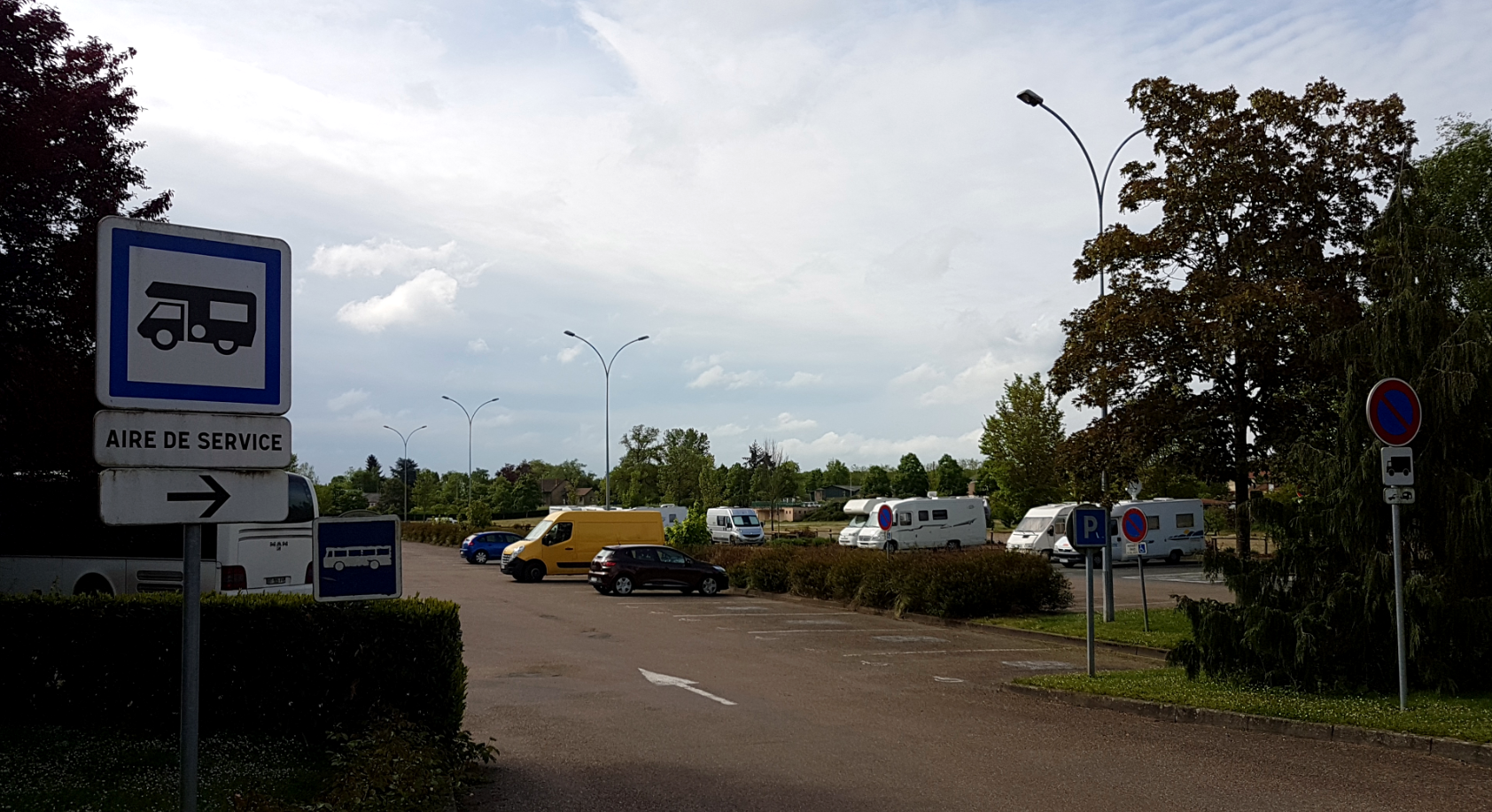
In addition to complying with the Highway Code, motorhomes must also follow the French General Code of Local Authorities and the Urban Planning Code, just like cars. You are therefore fully allowed to park your motorhome in towns and cities, as long as you respect local signage. You can also park your motorhome on private property.
However, be careful not to confuse parking with camping!
- While you are allowed to park on public roads, you are not permitted to set up your awning, outdoor furniture, or leveling blocks. This is considered wild camping and could result in a fine. Some tolerance may exist if you remain discreet, but prolonged use is likely to be treated as camping.
To avoid any issues, it’s best to head to service areas specifically designed for motorhomes or to campsites, using the CaraMaps app! You’ll find the best spots to stay with complete peace of mind.
We also invite you to read our article “Parking a motorhome in France: rules to know to enjoy the trip in 🚍🇫🇷” to learn more about motorhome parking.
Restrictions on motorhome parking in cities
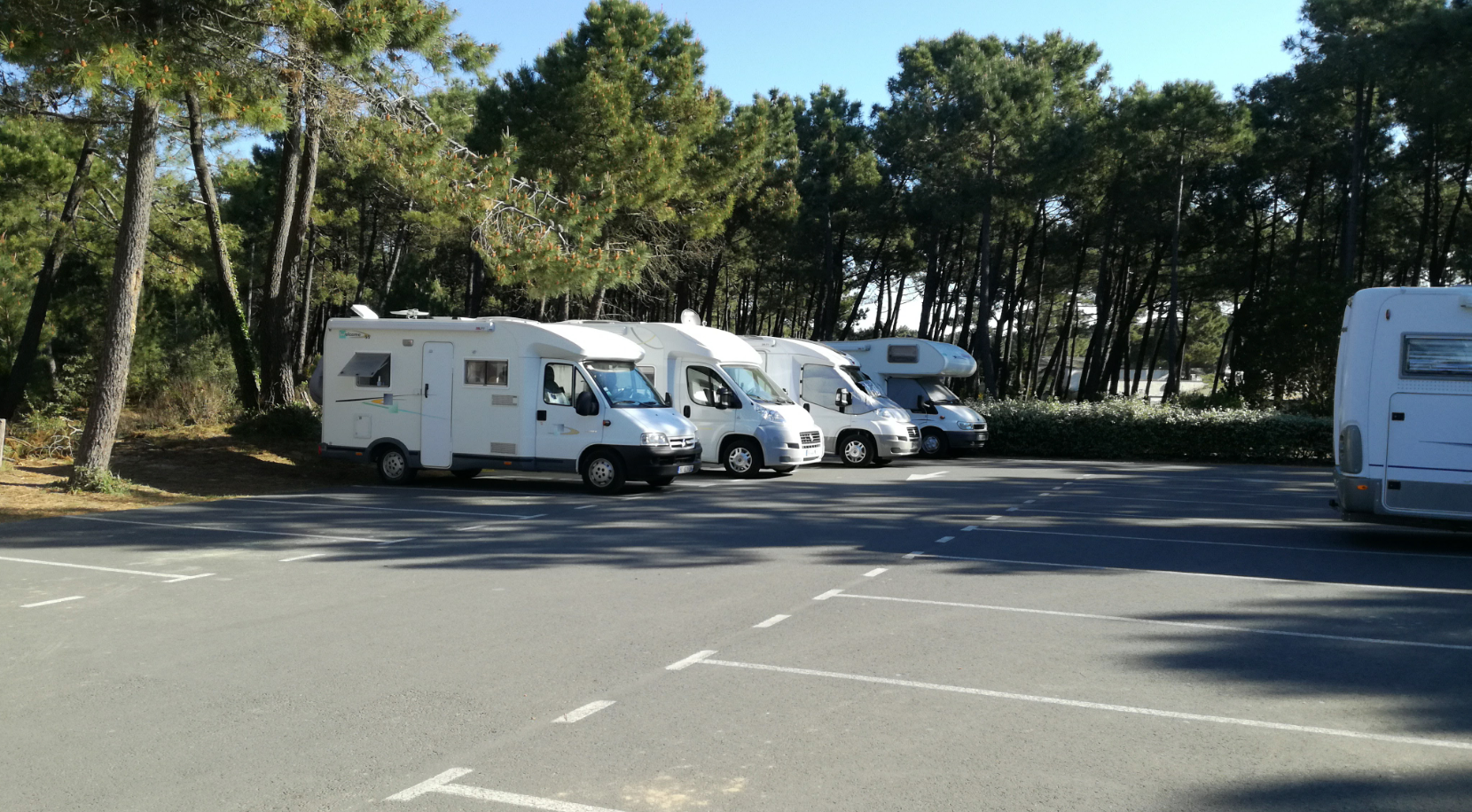
Since 2023, this trend has continued: more and more municipalities are introducing specific regulations to control or even limit motorhome parking. Without changing national laws, local authorities use municipal decrees to restrict access to certain areas, particularly along the coast, in city centers, or near sensitive natural sites. These measures are usually reinforced during the summer and peak travel seasons.
Given these developments, it is more important than ever to plan your stops ahead and check local regulations before parking. To avoid any unpleasant surprises, make sure to look up authorized areas and parking spots when preparing your itinerary!
A few regulatory details to keep in mind
In addition to local rules, some general regulations apply across the country.
- On public roads, parking a vehicle, including a motorhome, is generally limited to 7 consecutive days in the same spot (unless stricter local rules apply). Beyond this period, it may be considered abusive parking and could lead to penalties or even vehicle impoundment.
- On private land, parking is allowed as long as you have the owner’s permission. However, if the setup exceeds 3 months per year, it may be considered a long-term installation and could require planning permission under current regulations.
Controls are also becoming more frequent. More and more municipalities are introducing monitoring systems, such as sensors or cameras, to detect prolonged parking or illegal camping, especially in busy or sensitive areas.
What changes in motorhome regulations in 2026?
The Crit’Air sticker
What is the Crit’Air sticker?
Since January 1, 2025, restrictions on Crit’Air 3 vehicles have been strengthened in several Low-Emission Zones (ZFE – Zones à Faibles Émissions), particularly in major cities such as Paris and Lyon, where their circulation is now heavily restricted or even banned depending on local rules (specific hours, days of the week, or 24/7).
Today, around 25 ZFE zones are fully active in France. By the end of 2026, this number could rise to around forty urban areas with more than 150,000 inhabitants. While a bill to relax these ZFE regulations is under discussion in Parliament, the Crit’Air sticker remains a legal requirement for most city centers.
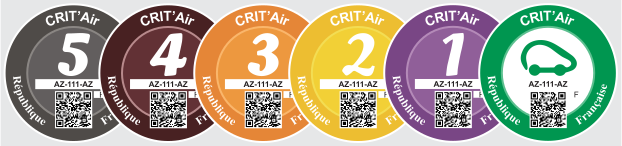
The Crit’Air sticker, or “air quality certificate,” is a label displaying a number from 0 to 5, corresponding to your vehicle’s environmental classification. There are 6 categories, determined by several factors: type of vehicle (car, two-wheeler, etc.), age, and engine type (petrol, diesel, etc.). These categories are defined by the French Ministry for Ecological Transition. You can find the breakdown of the 6 categories on the official website.
Is the Crit’Air sticker mandatory?
The sticker is mandatory for driving within active ZFE zones. Its purpose is to regulate traffic and reduce air pollution in these areas. It is also required during temporary traffic restrictions, such as pollution peaks.
Some metropolitan areas may offer exemptions or specific arrangements, particularly for certain types of vehicles like motorhomes (VASP – “Véhicule Automoteur Spécialisé” or specially adapted vehicles). However, these measures are defined on a case-by-case basis by local authorities.
- In Montpellier Méditerranée Métropole, a specific exemption exists for VASP vehicles, and the gradual expansion of the Low-Emission Zone is ongoing until July 2026.
- In Rouen, regulations have also been relaxed, allowing access for Crit’Air 0 to 3 vehicles, with 24-hour passes available in certain situations.
Other cities apply stricter or more flexible rules depending on their local context. Let’s hope authorities remain accommodating toward motorhomes and other leisure vehicles, especially as the future of ZFE zones continues to be debated 🤞
⚠️ Be careful when obtaining your Crit’Air sticker! Don’t rely solely on your motorhome’s registration date. Manufacturers often receive chassis and engines before the final vehicle is assembled, meaning the actual Euro emissions standard may differ from the registration year. We recommend checking the Euro standard on your registration certificate (section V.9 or equivalent).
You can order your Crit’Air sticker exclusively on the official government website: certificat-air.gouv.fr.
Crit’Air penalties
Failure to display a valid Crit’Air sticker or to comply with ZFE restrictions may result in a fixed fine ranging from €68 to €135, depending on the type of vehicle.
Registration fees
Each region sets the price of vehicle registration (“carte grise”), including for motorhomes, on a yearly basis. Since 2023, most French regions have increased their rates, in a context of seeking additional tax revenue and supporting the ecological transition.
Between 2024 and 2026, several regions introduced further increases in the price per fiscal horsepower. This now reaches around €50 to €60 in regions such as Pays de la Loire, around €45 to €58 in Nouvelle-Aquitaine, and between €36 and €42 in Hauts-de-France.
Please note that these rates may change each year depending on decisions made by regional councils. In addition, partial or full exemptions may still apply, particularly for so-called “clean” vehicles, although the rules have gradually evolved in recent years.
Motorhome service area pricing in 2026
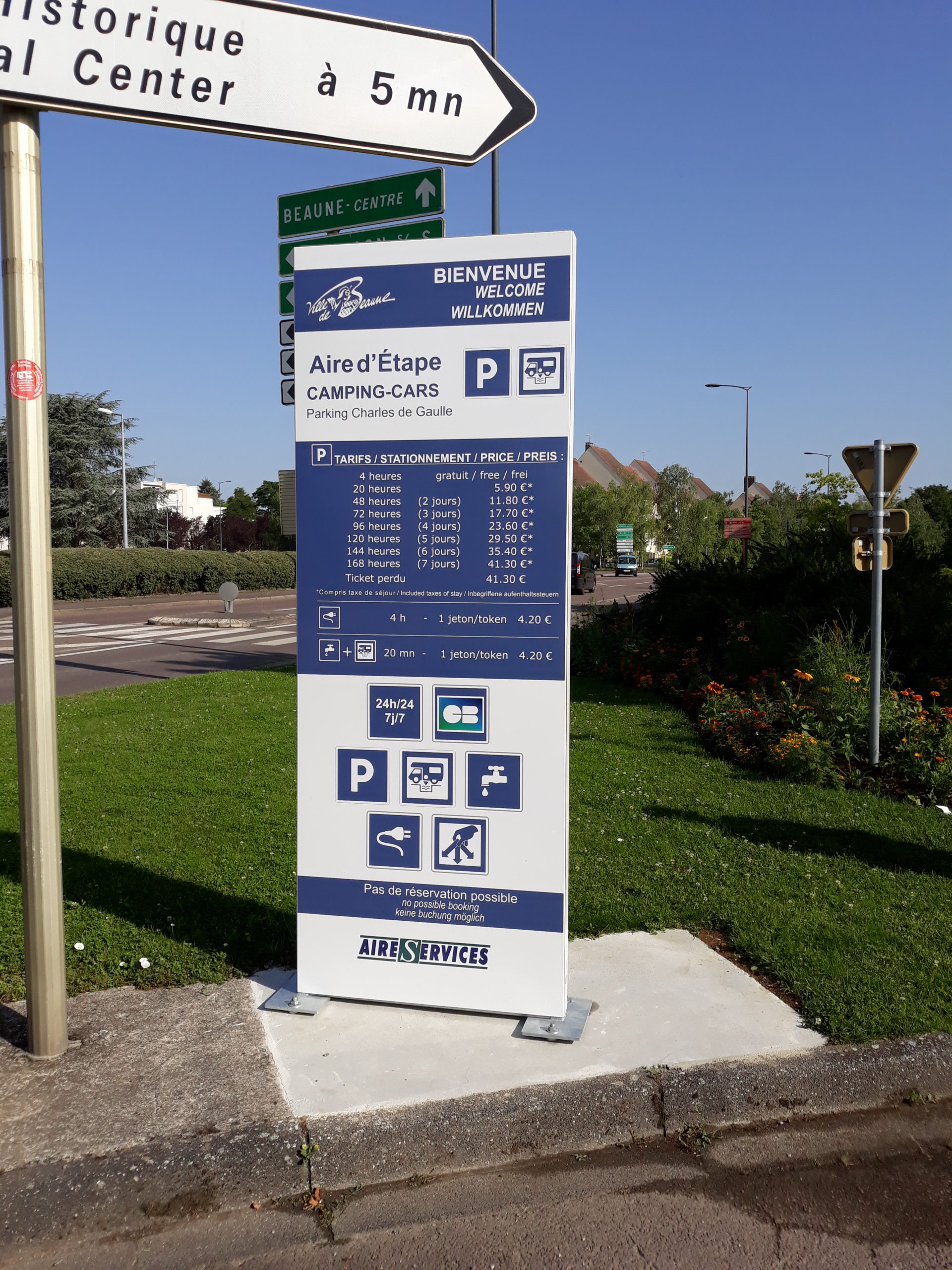
The economic context in France continues to impact pricing at service areas, with a gradual increase observed in recent years. This trend has continued between 2024 and 2026, especially during peak travel periods such as summer holidays.
According to the latest estimates from industry stakeholders, the number of completely free service areas has slightly decreased since 2023, as more sites are modernized or offer additional paid services. At the same time, average prices have continued to rise. Service + parking packages now cost around €12 to €13, while parking alone averages between €9 and €11 depending on the region and available facilities.
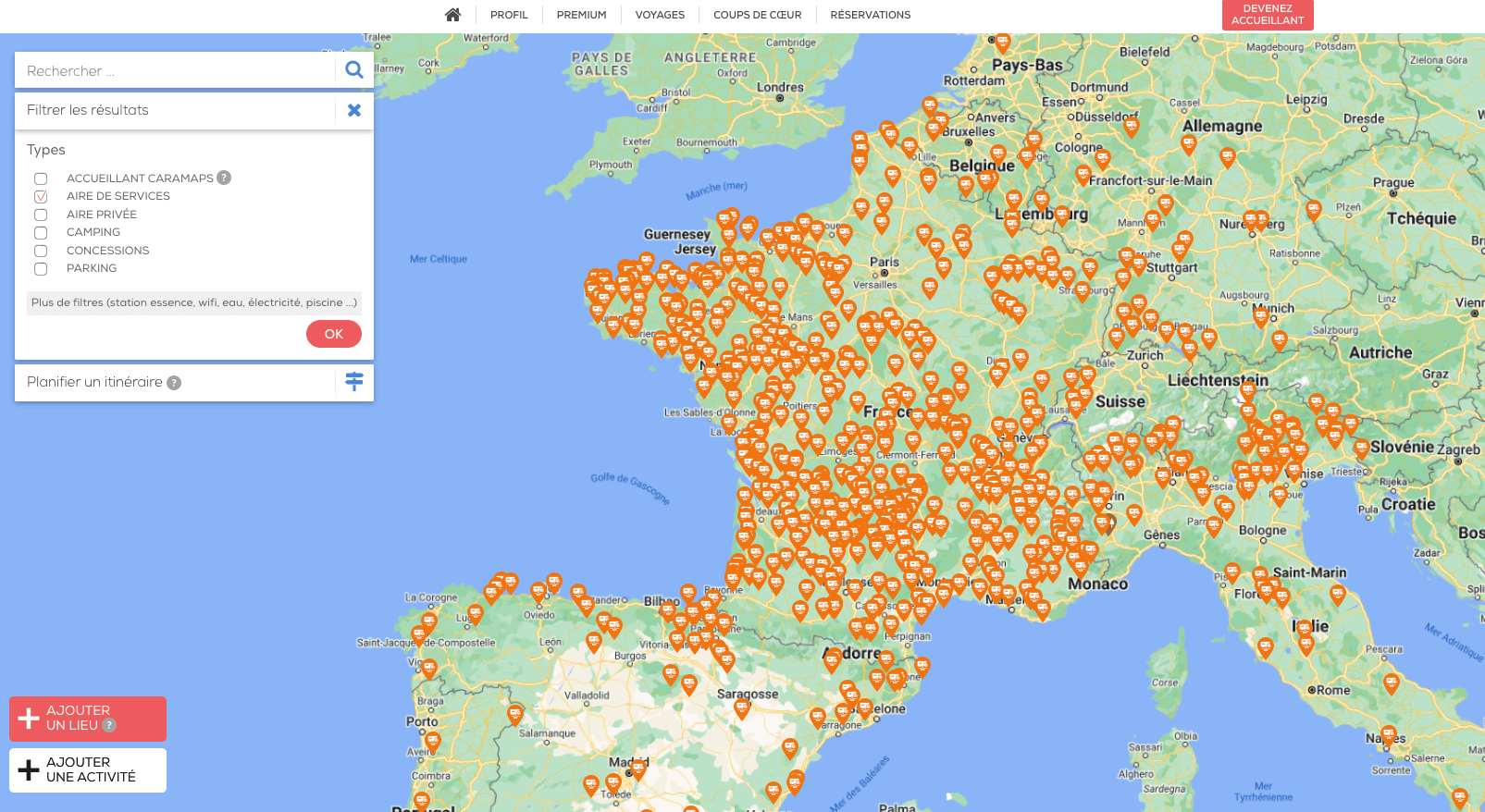
Despite this upward trend, there are still many free service areas in France, as well as across Europe! Looking for a free motorhome stop? Don’t hesitate to activate the “Service area” filter when searching on our map!
Did you enjoy your CaraMaps road trip experience and the advice from the community? Share your best anecdotes or photos from your trip about the places you visited and more thanks to the 100% collaborative CaraMaps app. 😁
Follow us also on our Instagram page @caramaps where you’ll discover incredible spots, and on our Facebook page where you’ll find new areas, new itineraries and news from the motorhome world every day!
You can also check out our other blog articles such as “Driving a motorhome: the rules to follow” and much more!


Bonjour. Je voulais construire un camping-car. Je voudrais savoir comment légaliser le véhicule.
Bonjour,
Nous vous conseillons la lecture de cet article : https://ffcc.fr/conseil-pratique/immatriculer-son-vehicule-de-loisirs/ qui résume bien les démarches à effectuer pour immatriculer son véhicule.
Belle journée
Does anyone know how a motorhome’s mass can be changed in France (downwards). OurUK built motorhome was rated at 3850 kg max, taking it above the 3500 kg limit. This was done as a matter of convenience by a previous owner. But, when we use it the mass is always less than 3500 kg and we are keen to reduce it. Easy in the U.K. but how in France ? I think DREAL is involved, but so far, have got nowhere.
Anyone got any thoughts or knowledge ?
Hello and thank you for your interest in CaraMaps. First of all, from an administrative point of view, it’s much easier to switch from a light vehicle to a heavy goods vehicle than the other way round. We therefore advise you to go directly to a motorhome concession, who will be able to tell you whether or not this is possible in your case. Then, if your request is approved, the change in your vehicle’s GVW will entail a change to your vehicle registration document, so you’ll need to go to the prefecture.
See you on the roads with CaraMaps! 🚐
Can you please tell me if being a UK citizen but living in France we are able to drive a British Registered Motorhome here ?? There seems to be so much information which varies and is confusing. Thank you.
Hello Wendy and thank you for your interest in CaraMaps ! If you are currently living in France, you can legally drive your motorhome on your foreign license for up to 12 months. After these 12 months, you will have to apply for a French driving license. However, some people from non European Union countries noticed that their application for French driving license was rejected when their driving license had not less than 6 months before expiry. Dont’t hesitate to go on the Service Public website for further information!
Also, if you imported your motorhome from the UK in France and you plan to use it for more than 1 month (since UK is not in European Union anymore), know that you need to register the vehicle in France!
Enjoy your travel with CaraMaps! 🚐
Sorry Maud but that is incorrect information, If you passed your UK test before 2021 then you keep your UK licence until it expires which could be in some cases until you become 70 years old. Mine for example because it’s the photo type is valid in France for 9 years, If you passed your UK test after 2021 then you have 12 months to change it.
Good morning John,
Thank you for this information, which I’ll make a note of. It’s sometimes difficult to find one’s way around, as the legislation concerning motorhomes is sometimes confusing. It’s always good to get advice from experienced travelers!
See you soon on the roads,
Maud